Skip to content

Feed

Exodus 33:14 verse card

A Message Has Arrived for You

These are God's promises for you today:

"My presence will go with you"

"I will give you rest"

Are you in a season where there is a lot on your shoulders?

If you are bearing the weight of it all, here is what God wants you to ...

Deep Dive

The Story Behind The Verse: Moses Pleads for God's Presence
Exodus 33:14 - Story Behind the Verse

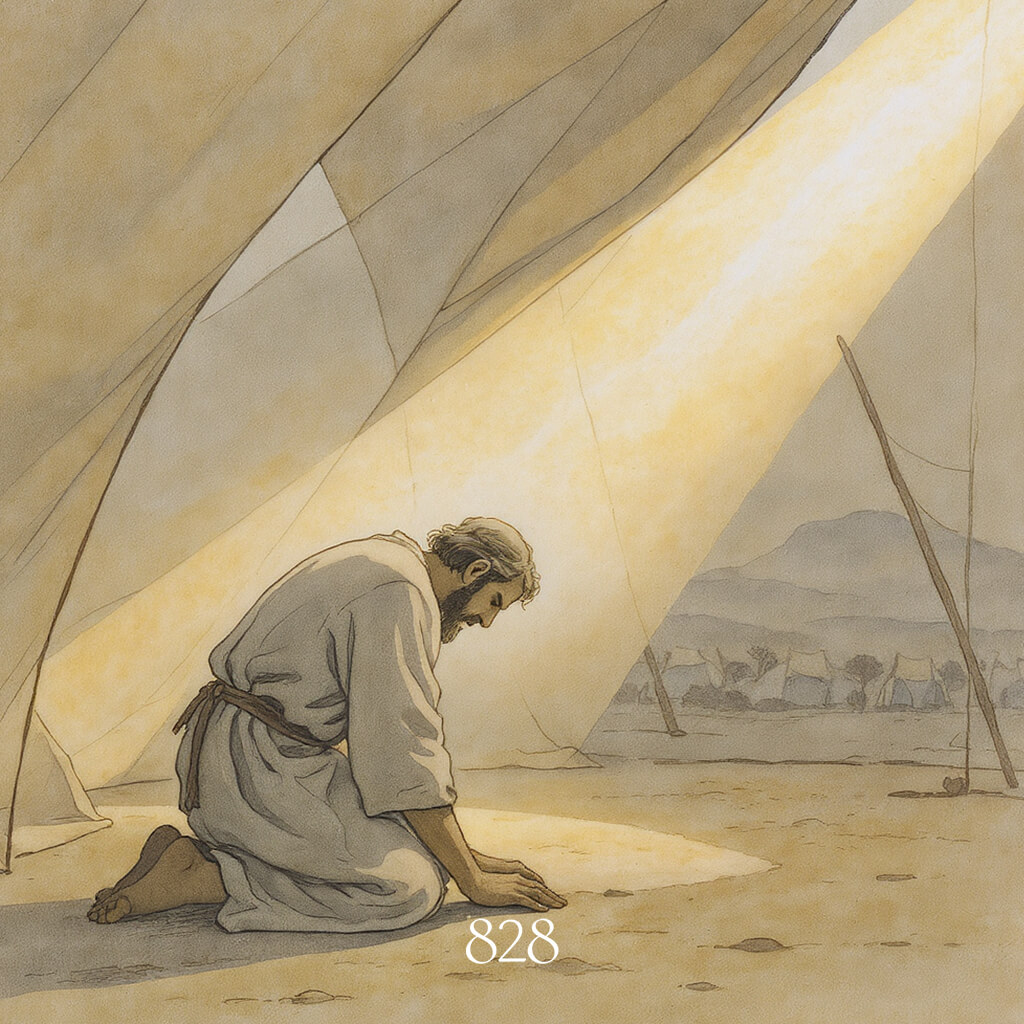
Moses was on Mount Sinai for forty days and forty nights receiving the Law from God. During his absence, the people could not wait any longer. They pressured Aaron to make them a god. Aaron collected their gold and fashioned a golden calf. The people bowed down to it.

God was disappointed by the Israelites' unfaithfulness. In Exodus 33, God promises to still give the Israelites the Promised Land, but He Himself would not go with them.

Moses then begins a back-and-forth dialogue with God. In verse 12, Moses says, "you tell me, 'Bring up this people,' and you have not let me know whom you will send with me." Moses had received a command from God, but rather than trying to fulfill it on his own, he brought it back to God and asked for his guidance. He reminded God, "You have said, 'I know you by name, and you have also found favor in my sight.'" Moses held God to His own words and asked Him to follow through. Moses spoke to God openly and directly, the way someone speaks to a person they know well. Moses had built a deep fellowship with God and his relationship with God is reflected in how he talks with God. In verse 13, Moses asks to learn God's ways so that he may continue to walk in His favor.

To all of this, God responded in verse 14: "My presence will go with you, and I will give you rest." God answered Moses personally. In verse 15, Moses takes this promise and extends it to include all of Israel. He tells God, "If Your presence does not go with us, do not bring us up from here." Moses refused to keep God's promise for himself alone. He then tells God that His presence among the Israelites is what shows that He is pleased with them and what distinguishes them from every other nation. In verse 17, God says He will do what Moses has asked.

Moses appealed to God. He reminded God of His own words, made his case, and asked God to act on what He already promised. Moses spoke to God this way because he had lived a life of continual fellowship with God. It allows him to adeptly intercede on behalf of his people so that the Israelites remained in God's grace. The same God who answered Moses is your God today. When you bring what you are carrying to Him, He answers with His presence and His rest.

What It Means

"My presence" (פָּנַי / panay)

The Hebrew word panim literally means "face." In Hebrew, the way someone expresses personal presence is through the face. When someone's face is turned toward you, they are present and engaged. When their face is turned away, they are withdrawing. That is why English translations render panim as "presence." God is not simply saying He will be there. He is saying He is turned toward you, attentive, and personally involved in your life.

"Will go with you" (יֵלֵכוּ / yelekhu)

The verb halak means to walk or to journey, emphasizing movement over time rather than a single moment. God's presence is companionship throughout the entire path. Every step, decision, transition, and uncertainty is walked together with Him. Wherever your life leads, God is with you through it all.

"And I will give you rest" (וַהֲנִחֹתִי לָךְ / vahanikhoti lakh)

The Hebrew word nuach refers to settling into peace, safety, and stability. Biblical rest is not escape from responsibility but freedom from restless worrying and relying on yourself alone. God's promise speaks to spiritual and physical rest. It echoes the rest of creation after God completed His work, a state of harmony and completion. This rest is received. It is a gift God gives to those who trust His presence.

Claim This Promise

I declare that the words of Exodus 33:14 are true in my life.

  • • I bring to God what I am carrying.
  • • When I plead before God, He answers me.
  • • God is with me. He is attentive and personally involved in my life.
  • • God gives me rest.
Today's Prayer

God,

Thank You for promising me Your presence and Your rest.

I confess that I have been trying to carry everything on my own. I have relied on myself instead of bringing what I carry to You.

Today I receive Your promise. Your presence goes with me. You are with me through it all.

Like Moses, I want to build a life of continual fellowship with You. I want to speak to You openly and directly. When I bring my requests to You, You answer them.

When I am overwhelmed and fall back to relying on myself, remind me to bring it to You. Help me to see that Your presence is my companionship for the entire path. Give me rest, the true rest that comes from completely trusting You.

Thank You that You answered Moses and chose to walk with His people. Thank You for choosing to walk with me too.

In Jesus' name I pray, Amen.

Share This Message

Do you know someone who is carrying a lot on their shoulders?

Share this with them and say, "Bring what you are carrying to God. He will answer with His presence and His rest." Your simple act of sharing could remind them that they do not have to carry it alone.

See more: Exodus 33:14
eight two eightAdmin

Posted in FOR YOUR SOUL


Matthew 11:28-30 verse card

A Message Has Arrived for You

These are Jesus' promises for you today:

"Come to me, and I will give you rest."

"My yoke is easy, and my burden is light."

Are you tired of carrying all the weight on your shoulders?

Jesus invites you to come to Him. He does...

Deep Dive

The Story Behind The Verse: An Invitation to the Weary
Matthew 11:28-30 - Story Behind the Verse

In Galilee, Jesus saw people who were weary and burdened. To them, He made this invitation: "Come to me, all you who are burdened, and I will give you rest. Take my yoke upon you, and learn from me, for I am gentle and humble in heart, and you will find rest for your souls. For my yoke is easy, and my burden is light." (Matthew 11:28-29).

A yoke is a wooden frame that joins two oxen together so they can work side by side. In ancient times, when a young ox needed training, farmers would yoke it together with an experienced ox. The experienced ox bore most of the weight and guided the work while the young ox walked alongside and learned.

This is what Jesus is offering. When you take His yoke upon you, Jesus bears most of the weight. You walk beside Him and learn from Him. You learn He is gentle and humble in heart. Today, Jesus is giving the same invitation and calling those who are weary and burdened. When you go to Jesus, He will give you rest.

What It Means

"Come to me" (δεῦτε πρός με / deute pros me)

The word deute, translated as "come," is a direct and earnest invitation. It is a heartfelt call to those who are struggling. The phrase pros me, translated as "to me," emphasizes personal relationship. Jesus is not pointing you to a system or a set of rules. He is inviting you to Himself.

"All who labor and are heavy laden" (πάντες οἱ κοπιῶντες καὶ πεφορτισμένοι / pantes hoi kopiontes kai pephortismenoi)

The word kopiontes, translated as "labor," describes those working to the point of exhaustion, worn down from striving. The word pephortismenoi, translated as "heavy laden," is in the perfect passive, indicating people who have been burdened and remain weighed down. Jesus addresses those crushed by various pressures, expectation, or guilt. His invitation is directed to the weary.

"I will give you rest" (κἀγὼ ἀναπαύσω ὑμᾶς / kago anapausō hymas)

The verb anapauō, translated as "rest," means to cause someone to rest, to refresh, to bring relief. It suggests deep restoration of strength. Jesus does not offer escape from life but renewal within it. The rest He gives is relief from trying to carry everything on your own.

"Gentle and humble in heart" (πραΰς εἰμι καὶ ταπεινὸς τῇ καρδίᾳ / praus eimi kai tapeinos tē kardia)

The word praus, translated as "gentle," describes controlled strength, power expressed with tenderness rather than force. The word tapeinos, translated as "humble," means lowly. Jesus has all authority, yet He is gentle with the weary. He is welcoming. You can come to Him just as you are.

"My yoke is easy and my burden is light" (ὁ γὰρ ζυγός μου χρηστὸς καὶ τὸ φορτίον μου ἐλαφρόν / ho gar zygos mou chrēstos kai to phortion mou elaphron)

The word chrēstos, translated as "easy," means kind, good, or well-suited. Jesus' yoke is kind and good. When you take Jesus' yoke, it is good for you. It does not wound or burden you. The word elaphron, translated as "light," means light in weight. Jesus does not remove all responsibility, but He carries the weight while you walk beside Him.

Claim This Promise

I declare that the words of Matthew 11:28-30 are true in my life.

  • • Jesus is gentle and humble.
  • • Jesus invites me to come to Him with my burdens.
  • • Jesus gives me rest for my soul.
  • • His yoke is easy and His burden is light.
Today's Prayer

God,

Thank You for inviting me to come to You.

I confess that I have been trying to carry what I was never meant to carry alone. I have been weary trying to handle everything in my own strength.

Today I accept Your invitation. I come to You with my burdens. I take Your yoke upon me. Teach me what it means to let You carry the weight while I walk beside You.

Remind me that You are gentle and humble in heart. When I am overwhelmed, remind me that Your yoke is easy and Your burden is light. Draw me back to Your side when I try to carry things on my own.

Thank You that I can come to You just as I am. Thank You that You simply invite me to come.

In Your name I pray, Amen.

Share This Message

Do you know someone who is carrying the weight on their own?

Share this with them and say, "Jesus invites you to come to Him and find rest." Your simple act of sharing could remind them that they do not have to carry everything on their own.

See more: Matthew 11:28-30
eight two eightAdmin

Posted in FOR YOUR SOUL

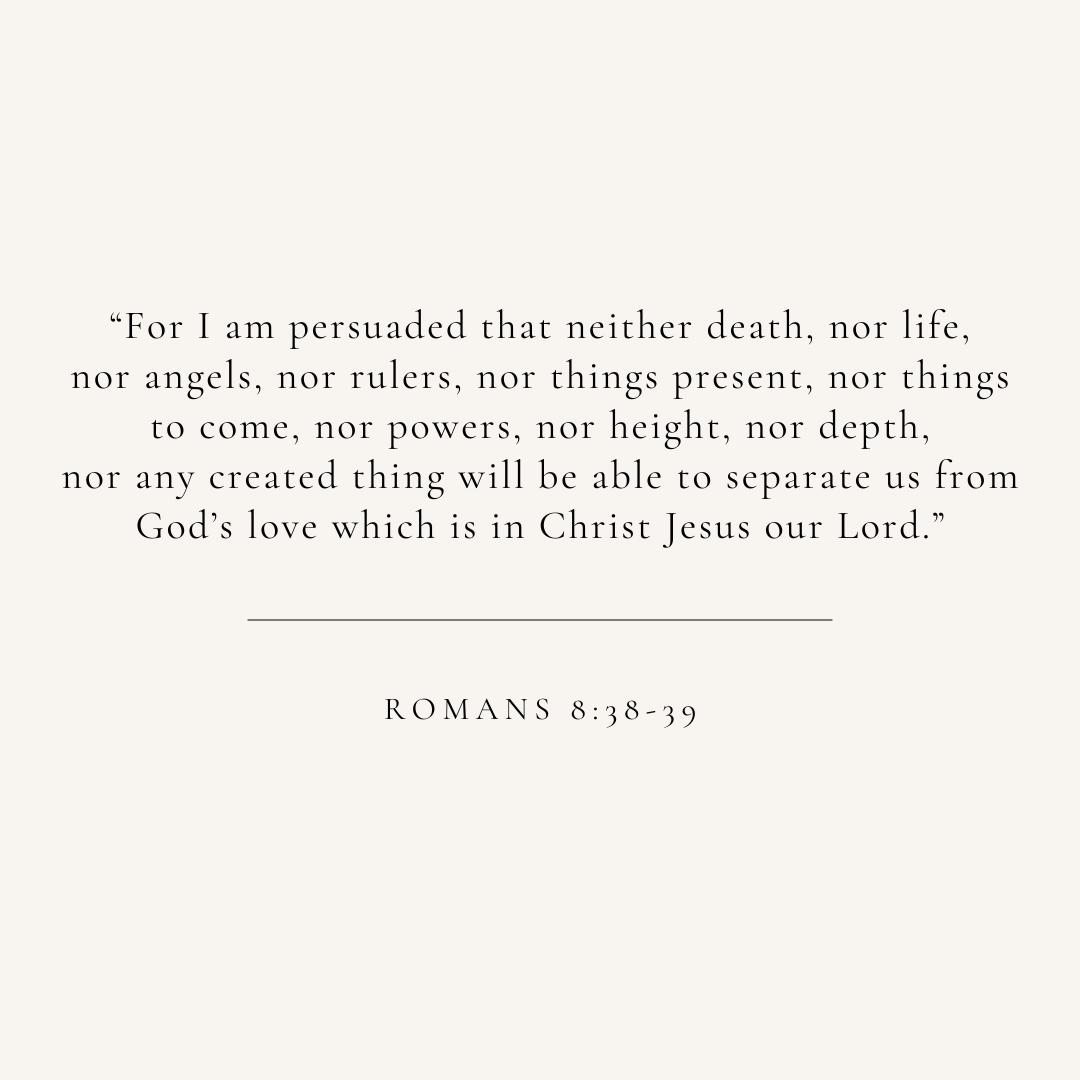
Romans 8:38-39 verse card

A Message Has Arrived for You

These are God's promises for you today:

"Nothing will be able to separate us from God's love."

"This love is in Christ Jesus our Lord."

Nothing can separate you from God's love. Not death. Not life. Not angels. Not rulers. N...

Deep Dive

The Story Behind The Verse: Life, Hope, and Unbreakable Love
Romans 8:38-39 - Story Behind the Verse

Romans 8 speaks of life through the Spirit, hope in the midst of suffering, and the unbreakable love of God. Romans 8 can be understood in three sections.

In the first section (verses 1-17), Paul speaks of life through the Spirit. He begins with a powerful declaration: "There is therefore now no condemnation to those who are in Christ Jesus" (Romans 8:1). The Spirit sets us free from the law of sin and death. The Spirit gives life and peace. The Spirit dwells in us with the same power that raised Jesus from the dead. Through the Spirit, we are adopted as God's children and become heirs with Christ.

In the second section (verses 18-30), Paul addresses present sufferings and future glory. He acknowledges that we suffer now, but he declares that present suffering cannot compare to the glory that will be revealed in us (Romans 8:18). We wait with hope for what is to come. While we wait, the Spirit helps us in our weakness and intercedes for us. And God is working all things together for good for those who love Him.

In the third section (verses 31-39), Paul asks, "If God is for us, who can be against us?" (Romans 8:31). God is for us in how He did not spare His own Son but gave Him up for us (Romans 8:32). So now, no one can bring a charge against us and no one can condemn us. Christ died, rose, and now intercedes for us at God's right hand (Romans 8:33-34). Then Paul asks another question, "Who shall separate us from the love of Christ?" (Romans 8:35). He lists hardships that might threaten this love: trouble, hardship, persecution, famine, nakedness, danger, sword. His answer is triumphant: none of these can separate us. "In all these things, we are more than conquerors through him who loved us" (Romans 8:37).

Verses 38-39 are the grand conclusion. After establishing that there is no condemnation, that the Spirit gives life and intercedes for us, that we are adopted as God's children, that present suffering leads to future glory, and that God is for us, Paul declares that absolutely nothing in all creation can separate us from God's love.

What It Means

"I am persuaded" (πέπεισμαι / pepeismai)

The Greek verb pepeismai is in the perfect passive tense, meaning "I have been completely convinced and remain convinced." It describes a certainty that began at a point in the past and continues unchanged into the present. Paul's conviction is unshakable because it rested on everything God had done for believers in Christ, as he outlined throughout Romans 8.

"Separate" (χωρίσαι / chōrisai)

The Greek verb chōrisai means to divide, to tear apart, or to create distance between two things that are joined. It carries the image of separating something that is strongly bonded together. Paul is saying that the bond between God and His people is so strong that no force in existence has the power to break it. This love cannot be hindered by anything.

"Any created thing" (οὔτε τις κτίσις ἑτέρα / oute tis ktisis hetera)

The Greek phrase ktisis hetera means any created being or thing. Paul uses this expression to close every possible loophole. After listing death, life, angels, rulers, things present, things to come, powers, height, and depth, he adds this final phrase to make clear that nothing in all of creation is excluded. Nothing in all of creation can separate you from God's love.

"In Christ Jesus our Lord" (ἐν Χριστῷ Ἰησοῦ τῷ κυρίῳ ἡμῶν / en Christō Iēsou tō kyriō hēmōn)

The Greek phrase en Christō means in Christ or within Christ. This is not a loose connection but a complete inclusion. God's love for you is not floating on its own. It is anchored and secured in Christ Jesus. Because it is in Christ, it cannot fail. Because it is in Christ, it does not depend on your worthiness. The guarantee of this love rests entirely on who Christ is and what He has done.

Claim This Promise

I declare that the words of Romans 8:38-39 are true in my life.

  • • Nothing can separate me from God's love.
  • • God loves me. His love for me never changes.
  • • I am held in unbreakable love that is secured in Christ Jesus.
Today's Prayer

God,

Thank You for Your love.

At times, I have wondered if Your love had limits and conditions.

Today I receive Your promise. Neither death, nor life, nor things present, nor things to come, nor any created thing can separate me from Your love. Remind me of the truth of Romans 8. There is life through the Spirit. You give hope for what is to come. Nothing can take Your love away from me.

I will live in the certainty of Your love. Thank You that this love is based on who You are and what Christ has done.

In Jesus' name I pray, Amen.

Share This Message

Do you know someone who feels that their actions or circumstances have separated them from God's love?

Share this with them and say, "Nothing can separate you from God's love. You are held in His great love." Your simple act of sharing could remind them that they are held in unbreakable love.

See more: Romans 8:38-39
eight two eightAdmin

Posted in FOR YOUR SOUL


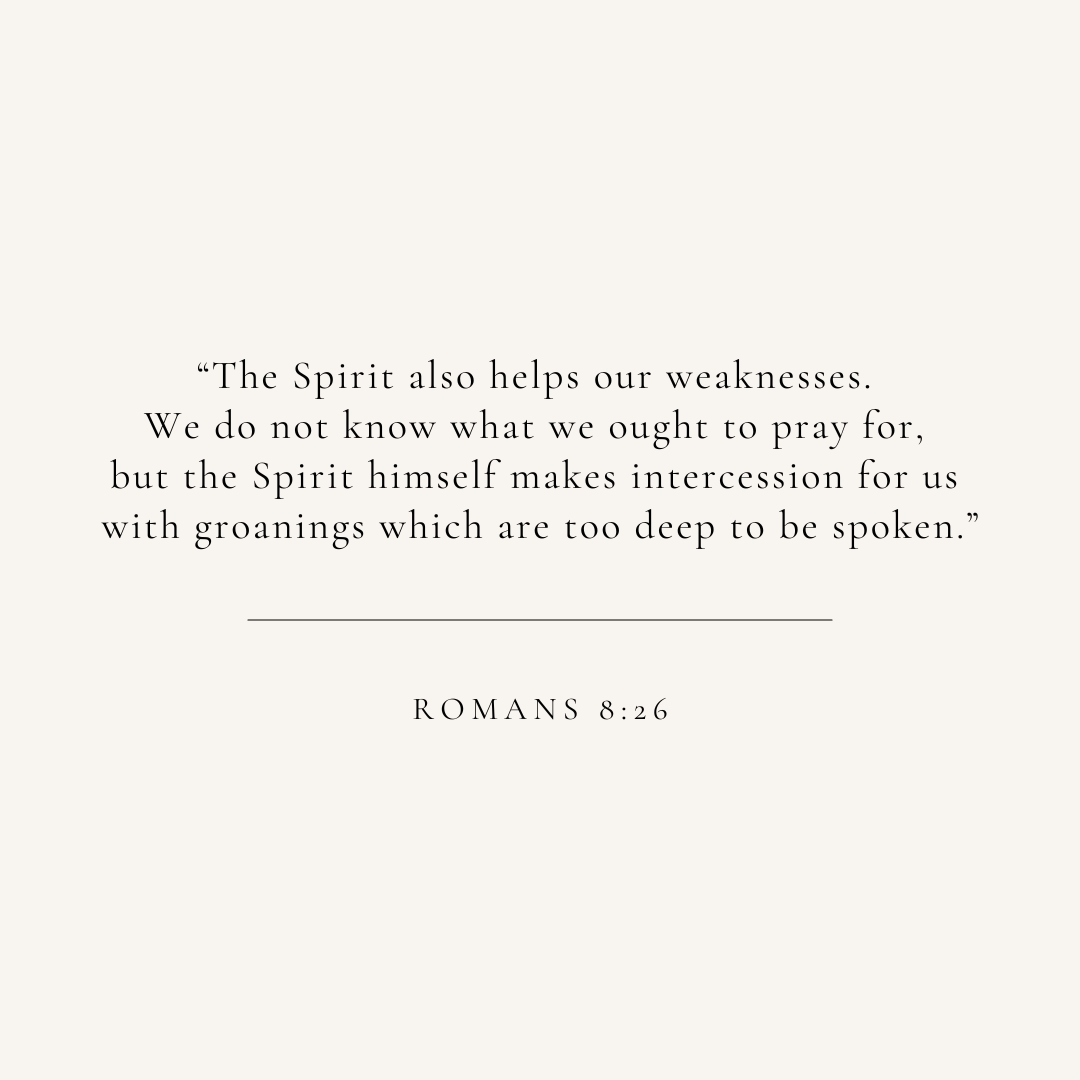
Romans 8:26 verse card

A Message Has Arrived for You

These are God's promises for you today:

"The Spirit helps our weaknesses."

"The Spirit himself makes intercession for us."

Have you ever wanted to pray but did not know what to say?

Maybe you are going through something diffi...

Deep Dive

The Story Behind The Verse: The Helper is Always With You
Romans 8:26 - Story Behind the Verse

Before Jesus ascended to heaven, He told His disciples, "I will pray to the Father, and he will give you another Helper, that he may be with you forever" (John 14:16). The Greek word for Helper is parakletos, meaning one who comes alongside. The Helper mentioned here is speaking of the Holy Spirit. The Holy Spirit is not far away. He is the presence of God living inside every believer, walking with each believer through every moment of life.

The Holy Spirit is your guide in everyday life. He signals to you when things are on the right track. He signals to you when you are veering from the path God has for you. He brings peace when you are living in God's will. He is constantly at work, gently guiding and directing you.

And one of the ways the Spirit helps you is in prayer. Sometimes we genuinely do not know what to pray for. But the Spirit knows and prays for us.

When you sit down to pray and the words will not come, the Spirit, knowing the situation you are in and your needs, will pray for you according to God's will. This is the Helper Jesus promised. He is with you always, guiding you and praying for you.

What It Means

"The Spirit helps our weaknesses" (συναντιλαμβάνεται τῇ ἀσθενείᾳ ἡμῶν / synantilambаnetai tē astheneia hēmōn)

The verb synantilambanomai is a vivid compound word. It combines syn (together) and antilambanomai (to take hold, to help). Antilambanomai is the same word used in Luke 1:54, "He has given help to Israel, his servant." Together they picture the Spirit taking hold of the burden with you. The Spirit is not helping from far away. It is the Spirit meeting you in your weakness and supporting you there.

"We do not know how to pray as we ought" (τὸ γὰρ τί προσευξώμεθα καθὸ δεῖ οὐκ οἴδαμεν / to gar ti proseuxōmetha katho dei ouk oidamen)

The phrase katho dei means "as is fitting" or "as is necessary." Paul is not describing laziness or lack of faith. He is acknowledging a deep human limitation. We at times cannot see how our situation fits within God's larger purposes. We may not know how God is working. We lack the perspective required to pray fully in line with God's will.

"With groanings which cannot be uttered" (στεναγμοῖς ἀλαλήτοις / stenagmois alalētois)

Stenagmos refers to a deep, inward groaning. Alalētos means incapable of being expressed in speech. Paul is describing prayer that cannot be put into words. When pain, confusion, or longing is too deep to form into words, the Spirit takes that inarticulate cry and intercedes according to God's will. What reaches God is not confusion, but clarity, shaped by the Spirit Himself.

Claim This Promise

I declare that the words of Romans 8:26 are true in my life.

  • • The Holy Spirit helps my weakness.
  • • When I do not know what to pray, the Spirit prays for me.
Today's Prayer

God,

Thank You for sending me the Holy Spirit as my Helper.

I confess that there are times when I do not know what to pray. I sit in silence, unsure of what words to speak. But today I understand that the Spirit is with me, helping me and praying on my behalf. Thank You that when I am silent and do not know what to say, the Spirit knows and speaks for me.

Help me tune in to what the Spirit is saying in my everyday life. When I am aligned with Your will, give me steady confidence to keep going. When I begin to wander, may I tune into what the Holy Spirit is telling me and realign my steps back to You.

In Jesus' name I pray, Amen.

Share This Message

Do you know someone who struggles with prayer? Someone who feels like they cannot find the right words to pray?

Share this with them and say, "The Holy Spirit is with you. The Spirit will help you and pray for you." Your simple act of sharing could remind them that they have a Helper who is always with them.

See more: Romans 8:26
eight two eightAdmin

Posted in FOR YOUR SOUL


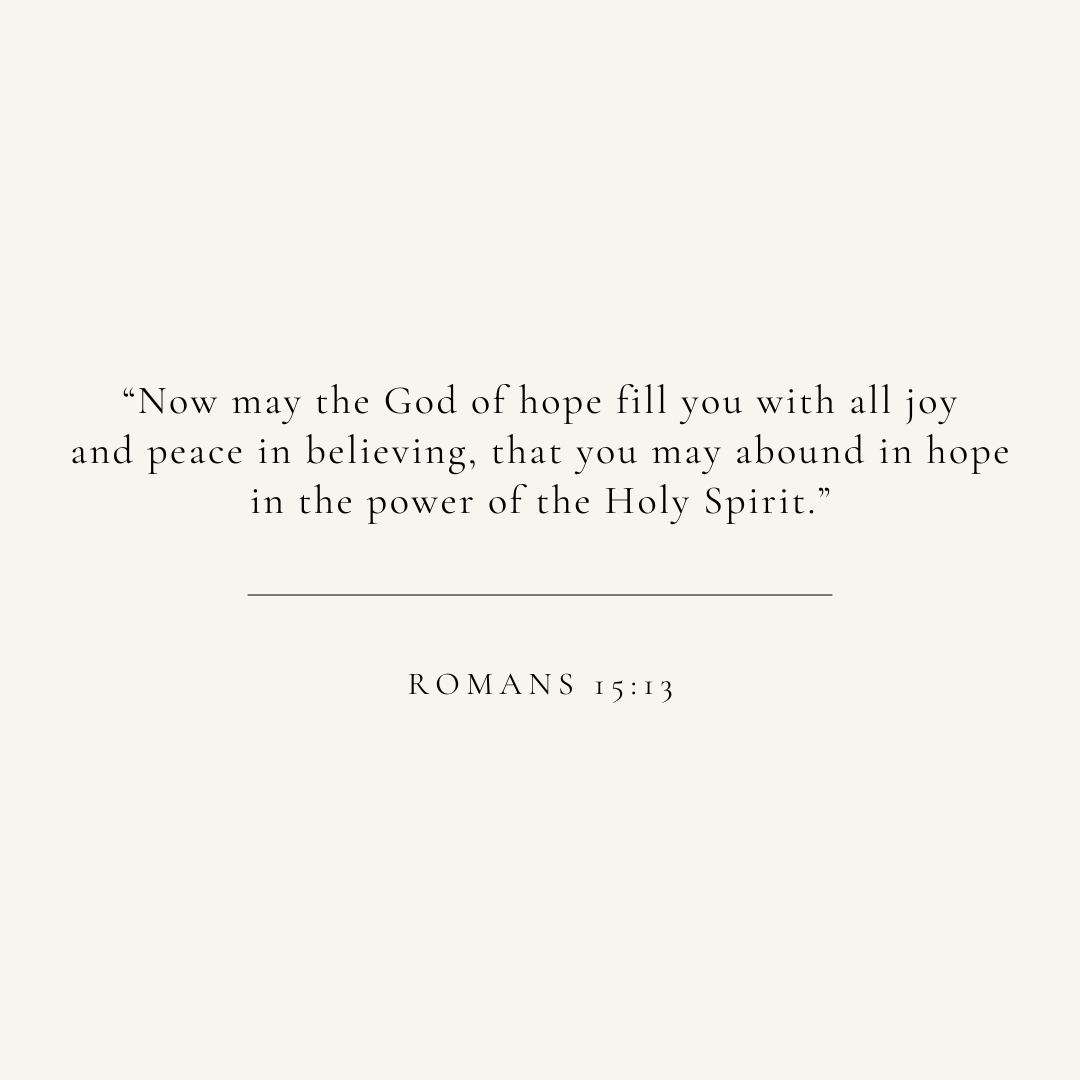
Romans 15:13 verse card

A Message Has Arrived for You

These are God's promises for you today:

"The God of hope will fill you with all joy and peace."

"By the power of the Holy Spirit, hope will overflow in you."

God promises to fill you completely with all joy and peace. And H...

Deep Dive

The Story Behind The Verse: A Blessing for Living in Unity
Romans 15:13 - Story Behind the Verse

The believers in Rome were struggling to live together. Some believed they could eat anything. Others ate only vegetables (Romans 14:2). Some regarded certain days as special. Others treated every day alike (Romans 14:5). Instead of accepting one another, they judged and looked down on each other (Romans 14:10).

Paul responds by calling them to a different way of living. He calls them to bear with the weak (Romans 15:1), to build up their neighbors (Romans 15:2), and to have the same attitude toward each other that Christ had (Romans 15:5). Throughout this teaching, Paul points to Christ as the model. The attitude we are called to have toward each other is rooted in what Christ first showed us. The goal is that "with one mind and one voice you may glorify the God and Father of our Lord Jesus Christ" (Romans 15:6).

Paul then reminds them that this unity between Jews and Gentiles is part of God's plan (Romans 15:8-12). From verses 9 to 12, Paul quotes four Old Testament passages (Psalm 18:49, Deuteronomy 32:43, Psalm 117:1, Isaiah 11:10) to show that God intended for Jews and Gentiles to glorify Him together. Then comes verse 13, the conclusion and blessing. After all this teaching rooted in Christ, Paul does not say "now try harder." He prays, "May the God of hope fill you with all joy and peace in believing, that you may abound in hope in the power of the Holy Spirit." Verse 13 blesses them with overflowing hope.

Verse 13 provides the power to live out everything Paul has taught. Bearing with others is hard. Building others up instead of pleasing yourself is hard. Accepting those who are different is hard. But when the God of hope fills you with joy and peace, you receive what you need. Christ shows the way, and the Holy Spirit gives you strength and power to live accordingly. Today, the same blessing is for you.

What It Means

"The God of hope" (ὁ δὲ θεὸς τῆς ἐλπίδος / ho de theos tēs elpidos)

The Greek word elpis means confident expectation, not wishful thinking. It describes a settled assurance about the future grounded in God's character and promises. Paul describes God as the very source of hope. Hope flows from who He is. Because He is the God of hope, those who belong to Him are never without reason to hope.

"Fill you with all joy and peace" (πληρῶσαι ὑμᾶς πάσης χαρᾶς καὶ εἰρήνης / plērōsai hymas pasēs charas kai eirēnēs)

The verb plērōsai means to fill completely or to bring to fullness. Paul prays not for a partial experience but for a complete filling. The word pasēs means every kind or the fullness of. Chara refers to deep and enduring joy, while eirēnē speaks of peace that reflects wholeness and reconciliation, echoing the Hebrew idea of shalom. This joy and peace are not dependent on circumstances but arise from trusting God. Paul envisions believers so filled that nothing essential is lacking.

"That you may abound in hope" (εἰς τὸ περισσεύειν ὑμᾶς ἐν τῇ ἐλπίδι / eis to perisseuein hymas en tē elpidi)

The verb perisseuein means to overflow, to have more than enough, to abound. Hope is meant to be abundant and overflowing. The structure of the sentence shows that joy and peace in believing lead to this overflow of hope. When God fills you, hope spills beyond you. It becomes something others can see and receive.

"In the power of the Holy Spirit" (ἐν δυνάμει πνεύματος ἁγίου / en dynamei pneumatos hagiou)

The word dynamis means power that transforms. This is the same power that raised Jesus from the dead (Romans 8:11). The filling with joy, peace, and hope is not produced by human discipline alone. It is the result of the Holy Spirit working within the believer. The unity Paul calls for is sustained not by effort, but by divine power.

Claim This Promise

I declare that the words of Romans 15:13 are true in my life.

  • • The God of hope is with me.
  • • God fills me with all joy and peace.
  • • By the Holy Spirit's power, hope overflows in me and through me to others.
Today's Prayer

God of hope,

Thank You that You are the God who fills me with joy and peace.

At times, I have found it difficult to bear with others. I have struggled to accept those who see things differently than I do. I have wanted to please myself instead of building others up.

Today I receive Your promise: "The God of hope will fill you with all joy and peace in believing, that you may abound in hope."

Fill me with Your joy and peace. I will have the same attitude toward others that Christ had toward me. As Christ accepted me, I will also accept others. Let hope overflow in me so that together with those around me, I can glorify You.

Thank You that this does not depend on my own effort but on the power of Your Holy Spirit. You are the God of hope, and You are at work in me.

In Jesus' name I pray, Amen.

Share This Message

Do you know someone who is struggling to live in harmony with others?

Share this with them and say, "The God of hope wants to fill you with all joy and peace." Your simple act of sharing could remind them that hope overflows for believers.

See more: Romans 15:13
eight two eightAdmin

Posted in FOR YOUR SOUL


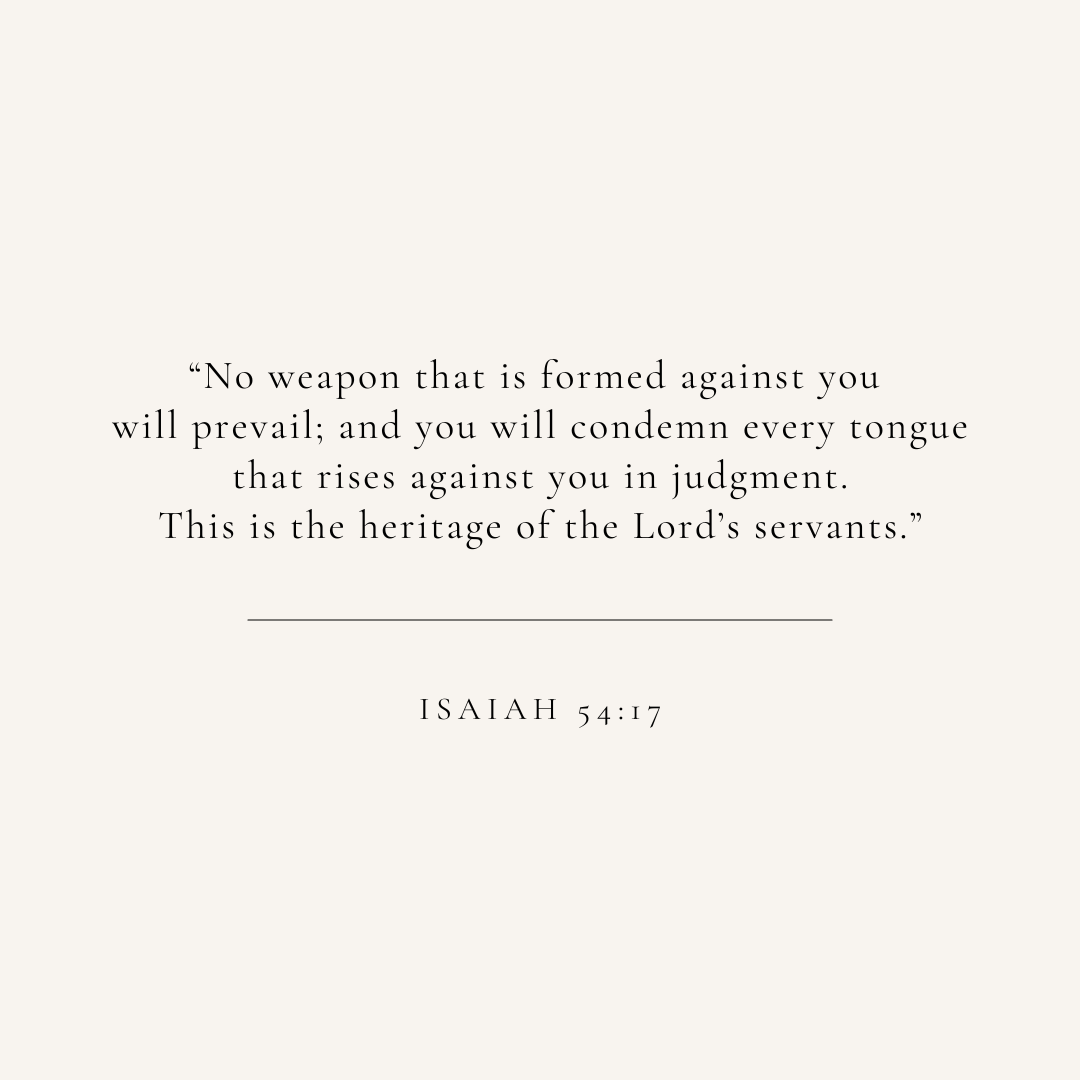
Isaiah 54:17 verse card

A Message Has Arrived for You

These are God's promises for you today:

"No weapon that is formed against you will prevail."

"You will condemn every tongue that rises against you in judgment."

"This is the heritage of the Lord's servants."

Have you ever fel...

Deep Dive

The Story Behind The Verse: A Promise in the Ashes
Isaiah 54:17 - Story Behind the Verse

When God spoke these words through Isaiah, Israel had lost everything. Babylon had conquered Jerusalem (2 Kings 25:8-21). The temple was burned to the ground. The city walls were torn down. The people were taken away as prisoners to a foreign land. The surrounding nations mocked them and questioned God's power to save them.

Israel had turned away from God for generations, worshiping idols and ignoring His commands (2 Kings 17:7-18). As a consequence, God allowed Babylon to conquer them. Yet, Isaiah 54 was written to those who were turning back to God.

In the middle of this hardship, God spoke this promise, "No weapon that is formed against you will prevail." God acknowledged their pain and their sense of abandonment. Then He made an eternal covenant: "The mountains may depart, and the hills be removed, but my loving kindness will not depart from you" (Isaiah 54:10).

Seventy years later, King Cyrus issued a decree allowing the Jews to return and rebuild (Ezra 1:1-4). The nations that spoke against them could not stop God's plan. The weapons formed against them did not succeed. Today, the same promise belongs to you as the Lord's servant.

What It Means

"No weapon that is formed against you will prevail" (כָּל־כְּלִי יוּצַר עָלַיִךְ לֹא יִצְלָח / kol-keli yutsar alayikh lo yitslach)

The Hebrew word yutsar means to form or craft deliberately. It describes something made with intention, like a blacksmith forging a weapon. This tells us that opposition may be deliberately aimed at you. The phrase lo yitslach means will not succeed. The opposition may come, but it will not accomplish its purpose.

"You will condemn every tongue that rises against you in judgment" (וְכָל־לָשׁוֹן תָּקוּם־אִתָּךְ לַמִּשְׁפָּט תַּרְשִׁיעִי / v'khol-lashon takum-itakh lamishpat tarshi'i)

The word takum means rises up, like a prosecutor standing to make accusations in court. The word tarshi'i means you will condemn or prove guilty. You are not only protected from accusations. You are given authority to declare them false.

"This is the heritage of the Lord's servants" (זֹאת נַחֲלַת עַבְדֵי יְהוָה / zot nachalat avdei YHWH)

The word nachalat means inheritance or heritage. This protection is not a reward you earned. It is your inheritance as God's child, passed down through the generations and guaranteed by God's covenant. The phrase avdei YHWH means those who belong to the Lord and walk in His ways.

Claim This Promise

I declare that the words of Isaiah 54:17 are true in my life.

  • • No weapon formed against me will prevail.
  • • I have authority to condemn every tongue that rises against me in judgment.
  • • This protection is my inheritance as the Lord's servant.
Today's Prayer

God,

Thank You for Your promise of protection.

I confess that I have felt unsettled by accusations and hurtful words. I have felt vulnerable. Today I receive Your promise.

Help me to stand in the authority given to me as one who belongs to You. When difficulties come, they will not prevail. When accusations rise, I can declare them false. This is my inheritance as the Lord's servant.

Thank You for reminding me that I belong to you. Thank you for keeping me safe.

In Jesus' name I pray, Amen.

Share This Message

Do you know someone facing difficulties right now? Someone who feels hurt by accusations?

Share this with them and say,
"Nothing that comes against you will succeed."
Your simple act of sharing could remind them of God's protection over their life.

See more: Isaiah 54:17
eight two eightAdmin

Posted in FOR YOUR SOUL


Psalm 16:8-9 verse card

A Message Has Arrived for You

These are God's promises for you today:

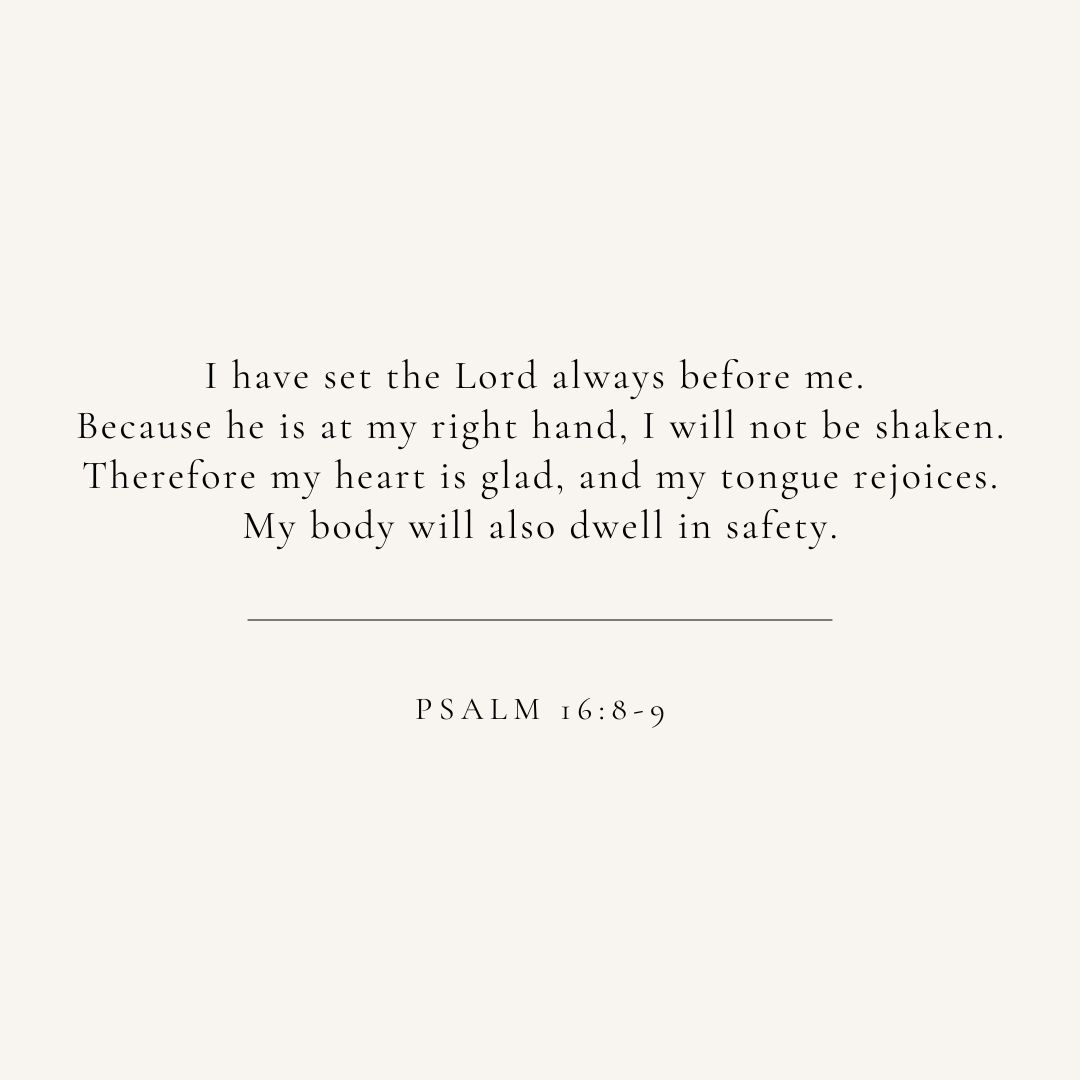
"I have set the Lord always before me."

"Because he is at my right hand, I shall not be shaken."

"Therefore my heart is glad, and my tongue rejoices."

Life brings many circumstances tha...

Deep Dive

The Story Behind The Verse: True Security in God's Presence
Psalm 16:8-11 - Story Behind the Verse

Psalm 16 is David's declaration that his true security is found in God. Throughout his life, David faced uncertainty and danger. Yet in those moments, he focuses on his God instead of his circumstances.

David begins with a request: "Preserve me, God, for I take refuge in you." (verse 1). Then he says to God: "You are my Lord" (verse 2). In verses 3 and 4, David contrasts God's people with those who follow other gods and acknowledges that Lord alone is God. He pledges his loyalty to God.

In verses 5 and 6, David makes a remarkable statement about inheritance. In ancient Israel, inheritance meant the land that provided a family's security and future. David says, "The Lord is my portion and my cup. You made my lot secure. The lines have fallen for me in pleasant places. Yes, I have a good inheritance." David is saying that God Himself is his inheritance. He does not need land or possessions to feel secure. Having God is enough. Having God by his side is his inheritance.

David also speaks of God as his counselor who guides him (verse 7). Then in verse 8, David describes the decision he has made: "I have set the Lord always before me. Because he is at my right hand, I will not be shaken. Therefore my heart is glad, and my tongue rejoices. My body will also dwell in safety." David chooses to set God before him and keep God at his right hand. The right hand is the position of a protector, someone close enough to provide protection at any moment. David is saying that God is right there beside him, close and ready to protect.

Then David speaks of the blessings he has as one under God's guidance and protection. Verses 9 through 11 describe it: "Therefore my heart is glad, and my tongue rejoices. My body will also dwell in safety… You will show me the path of life. In your presence is fullness of joy. In your right hand there are pleasures forevermore." In God's presence, David was secure and joyful. Today, God invites you to look to Him as your source of security and to be joyful in Him.

What It Means

"I have set the Lord always before me" (שִׁוִּיתִי יְהוָה לְנֶגְדִּי תָמִיד / shiviti YHWH lenegdi tamid)

The verb shiviti comes from a root meaning to set or deliberately place. David is describing a conscious decision. He has positioned the LORD lenegdi, before him, directly in his awareness and focus. The word tamid means continually or consistently, indicating sustained attentiveness. This is a daily choice to orient one's life around God's presence.

"Because he is at my right hand, I will not be shaken" (כִּי מִימִינִי בַל־אֶמּוֹט / ki mimini bal-emot)

In Hebrew thought, the right hand signifies strength, honor, and protection. To stand at someone's right hand is to take the place of active defense. The phrase bal emot means "I will not totter" or "I will not be moved," describing stability under pressure. His security comes from God being by his side, protecting him.

"In your presence is fullness of joy" (שֹׂבַע שְׂמָחוֹת אֶת־פָּנֶיךָ / sova semachot et-paneycha)

The word sova means fullness or complete satisfaction. Semachot means "joys" (plural), suggesting richness and abundance rather than a single emotion. The phrase et paneycha literally means "before Your face," expressing relational closeness, not mere proximity. David declares that true and lasting joy is found in God's presence. Stability and joy both flow from being near God.

Claim This Promise

I declare that the words of Psalm 16:8-11 are true in my life.

  • • I set the Lord always before me.
  • • Because God is at my right hand, I will not be shaken.
  • • In God's presence, I find security and fullness of joy.
Today's Prayer

God,

Thank You for being at my right hand.

I confess that I often look to other things for security. I let uncertainties and fears shake me. Today, I choose to set You before me first. You are my protector, close and ready to help. You are my inheritance.

Remind me that You are the source of security. With You at my right hand, I am safe. In Your presence, my life is full of joy. Help me to remember that true security and true joy come from You. You will guide me along the path to living such a blessed life.

Thank You for being with me.

In Jesus' name I pray, Amen.

Share This Message

Do you know someone who feels unsettled by their circumstances? Someone who is looking for security?

Share this with them and say, "Set God before you. In His presence, you will find security and fullness of joy." Your simple act of sharing could help them discover what is found in God's presence.

See more: Psalm 16:8-9
eight two eightAdmin

Posted in FOR YOUR SOUL


Psalm 23:4 verse card

A Message Has Arrived for You

These are God's promises for you today:

"Even though I walk through this difficult time, I will fear no evil, for you are with me."

"Your rod and your staff, they comfort me."

In our lives, we come across dark valleys. These...

Deep Dive

The Story Behind The Verse: Walking with God through Dark Valleys
Psalm 23:4 - Story Behind the Verse

David knew what it was like to walk through dark valleys. As a young boy, he defeated the giant Goliath (1 Samuel 17) and became a hero throughout Israel. When the women of Israel sang, "Saul has killed his thousands, and David his ten thousands" (1 Samuel 18:7), King Saul became jealous and feared that David might one day take the kingdom. From that point on, David fled from Saul and became a fugitive for over ten years (1 Samuel 18-26).

But David's struggles did not end there. His own son Absalom staged a coup to seize the throne (2 Samuel 15). David had to flee Jerusalem with his household and servants. Six hundred soldiers marched with him (2 Samuel 15:18). The whole countryside wept as they passed by (2 Samuel 15:23). They fled through the night, crossing the Jordan River to escape. Their lives were in real danger.

Yet in the midst of this darkness, David declared, "I will fear no evil." He said this because God was his shepherd. As a young boy, he had been a shepherd himself, protecting and guiding his sheep through every danger. With God as his shepherd, David knew he was safe.

Psalm 23:4 does not promise a life without valleys, but it promises you will not walk alone. Now, the same Shepherd who led David leads you.

What It Means

"The valley of the shadow of death" (גֵּיא צַלְמָוֶת / gei tzalmaveth)

The Hebrew word tzalmaveth means deep darkness, traditionally read as "shadow" (tzel) and "death" (maveth). It means a valley where the shadow of death hangs. This describes the hardest seasons of life when the way forward feels dark and uncertain.

"I will fear no evil, for you are with me" (לֹא־אִירָא רָע כִּי־אַתָּה עִמָּדִי / lo-ira ra ki-atah immadi)

David does not say "no evil will come." He says "I will fear no evil." The difference is important. Evil may come. However, David is not afraid because he knows God is with him. The Hebrew word immadi means not just companionship but active protection and guidance. God is not just beside you. He is acting on your behalf.

"Your rod and your staff, they comfort me" (שִׁבְטְךָ וּמִשְׁעַנְתֶּךָ הֵמָּה יְנַחֲמֻנִי / shivtecha u'mish'antecha hemmah yenachamuni)

The rod (shevet) was a weapon for protection. The staff (mish'anet) was a tool for guidance. With these two things, the shepherd protected his sheep from threats and led them toward safety. God is both our Protector and Guide. His rod and staff bring comfort even in the darkest valley.

Claim This Promise

I declare that the words of Psalm 23:4 are true in my life.

  • • Even in the valley of the shadow of death, I will not fear.
  • • God is with me, protecting and guiding me.
  • • His presence comforts me.
Today's Prayer

God,

Thank You for your presence.

Through all the dark seasons in my life, You have been with me. You have watched over me and led me.

Should I go through a time of hardship again, I will not be afraid because You are with me. You are my good shepherd. Your rod protects me from harm. Your staff guides me on the right path. Thank you for your faithfulness.

Thank you for always being with me.

In Jesus' name I pray, Amen.

Share This Message

Do you know someone walking through a dark valley right now? Someone who feels alone in their suffering?

Share this with them and say,
"You are not alone. God is with you."
Your simple act of sharing could remind them that God is the good shepherd.

See more: Psalm 23:4
eight two eightAdmin

Posted in FOR YOUR SOUL

Psalm 27:1 verse card


A Message Has Arrived for You

These are God's promises for you today:

"The Lord is my light and my salvation. Whom shall I fear?"

"The Lord is the strength of my life. Of whom shall I be afraid?"

Do you feel overwhelmed by what is happening around you?

W...

Deep Dive

The Story Behind The Verse: Steadfast in the Midst of Trouble
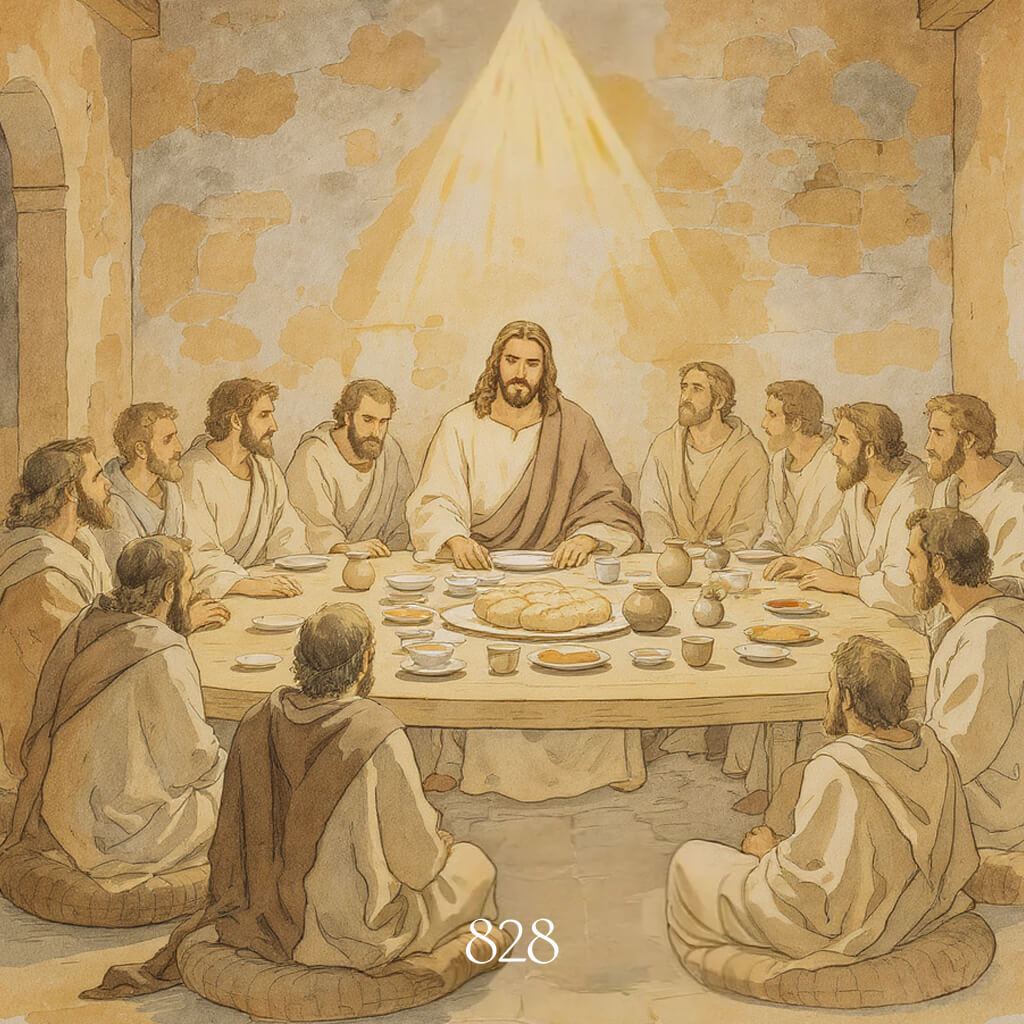
Psalm 27:1 - Story Behind the Verse

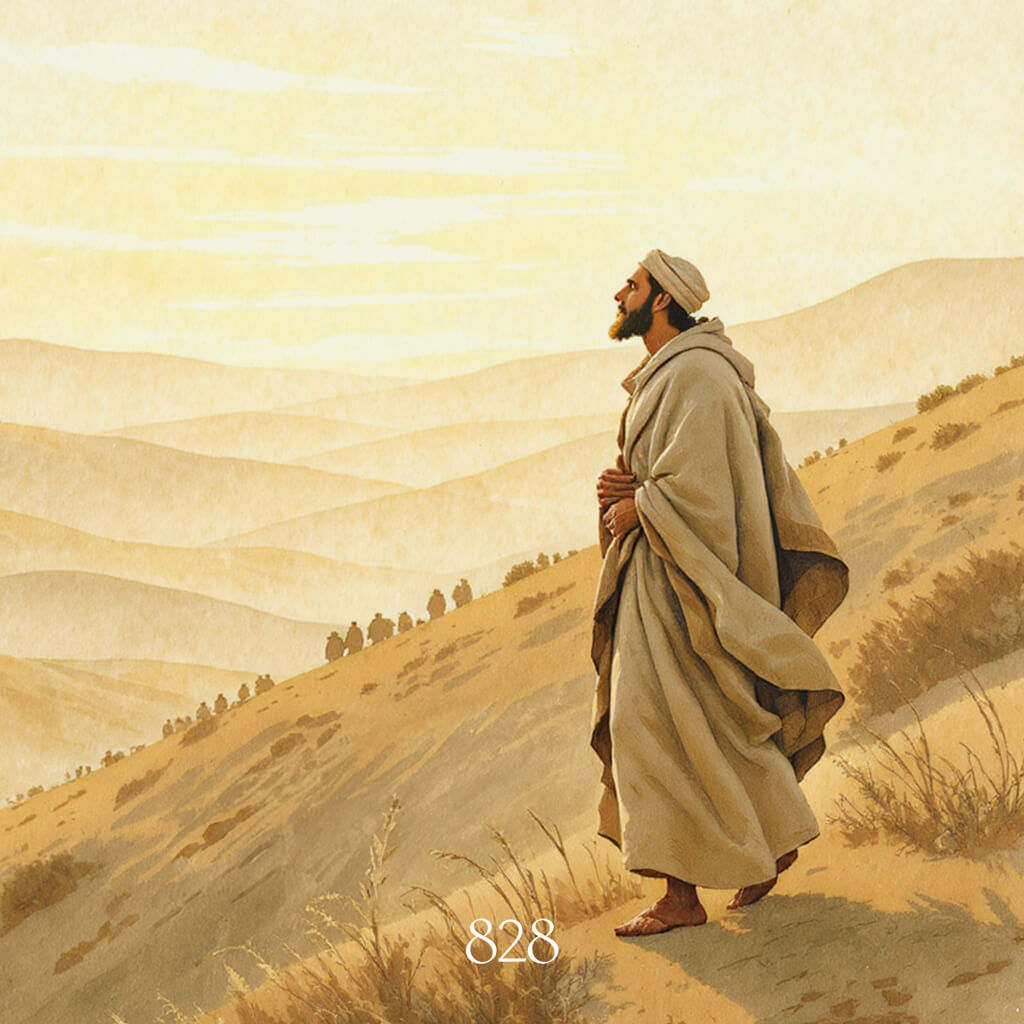
Through seasons of hardship, David trusted in God. In verse 1, David declares, "The Lord is my light and my salvation. Whom shall I fear? The Lord is the strength of my life. Of whom shall I be afraid?" For David, there is nothing to fear because his God is his anchor and source of strength.

David continually seeks God and asks that God would always be with him. In verse 4, David writes, "One thing I have asked of the Lord, that I will seek after: that I may dwell in the house of the Lord all the days of my life, to see the beauty of the Lord and to seek him in his temple." Whatever situation David was in, he desired to live in God's presence. He would go before God and be in awe of how great God is and the wonders He had done. He went before God and let Him know of the various situations he was going through. He brought his needs and his requests before God in prayer. In verse 5, David writes, "In the day of trouble, he will keep me secretly in his pavilion. He will hide me in the secret place of his tabernacle. He will lift me up on a rock." He knew being in God's presence was the safest place to be. God provides a refuge for David and protects him.

When oppressors surrounded David, he asks God for guidance. In verse 11, David writes, "Teach me your way, Lord. Lead me in a straight path." When enemies come after him and try to harm him, David prays for protection and direction.

This is the heart of Psalm 27. David faces real danger, yet he remains steadfast. David lived in fellowship with God. David invited God into every part of his life and walked with Him. The same invitation is open to you today. When you invite God into your everyday life and bring before God everything you are going through, you will find God to be faithful and reliable.

What It Means

"The Lord is my light and my salvation" (יְהוָה אוֹרִי וְיִשְׁעִי / YHWH ori v'yish'i)

The Hebrew word or means light. In Scripture, light represents life, guidance, and clarity. When God is your light, He illuminates the path ahead and drives away darkness. The word yesha means salvation and deliverance. This is the same root as the name "Jesus." When God is your salvation, He is the One who rescues you and brings you to safety.

"Whom shall I fear?" (מִמִּי אִירָא / mimi ira)

This is not a question seeking an answer. It is a declaration. David is saying there is no one to fear. When you truly understand who God is, the question answers itself. No person, no circumstance, no threat is greater than the God who is with you.

"The Lord is the strength of my life" (יְהוָה מָעוֹז־חַיַּי / YHWH maoz-chayai)

The Hebrew word maoz means fortress, stronghold, or place of protection. It refers to a secure, defensive structure that cannot be penetrated. God is your fortress. When you are with God, you are in the safest place.

Claim This Promise

I declare that the words of Psalm 27:1 are true in my life.

  • • The Lord is my light and my salvation.
  • • The Lord is the strength of my life.
  • • I have nothing to fear because God is with me.
Today's Prayer

God,

Thank You for being my light, my salvation, and my strength.

I confess that there are times when I feel fearful, and I forget that You are with me. But today I choose to trust in You.

You are my light, my salvation, and my fortress. With You, I have nothing to fear. May I invite you into every part of my life and do life with You. May I live in fellowship with You. Teach me to bring everything I am going through to You in prayer.

I want to live all the days of my life in Your presence. No matter where I am, what I do, and what I am going through, living in Your presence is the safest place to be. Thank you for being with me.

In Jesus' name I pray, Amen.

Share This Message

Do you know someone who needs to be reminded that God is with them?

Share this with them and say, "The Lord is your light, your salvation, and your strength. With Him, you have nothing to fear." Your simple act of sharing could remind them that they are never alone.
See more: Psalm 27:1
eight two eightAdmin

Posted in FOR YOUR SOUL

Luke 10:19 verse card

A Message Has Arrived for You

These are God's promises for you today:

"I give you authority to tread on serpents and scorpions."

"I give you authority over all the power of the enemy."

"Nothing can separate you from the love of God."

Jesus Christ has give...

Deep Dive

The Story Behind The Verse: Seventy Ordinary People, Extraordinary Power
Luke 10:19 - Story Behind the Verse

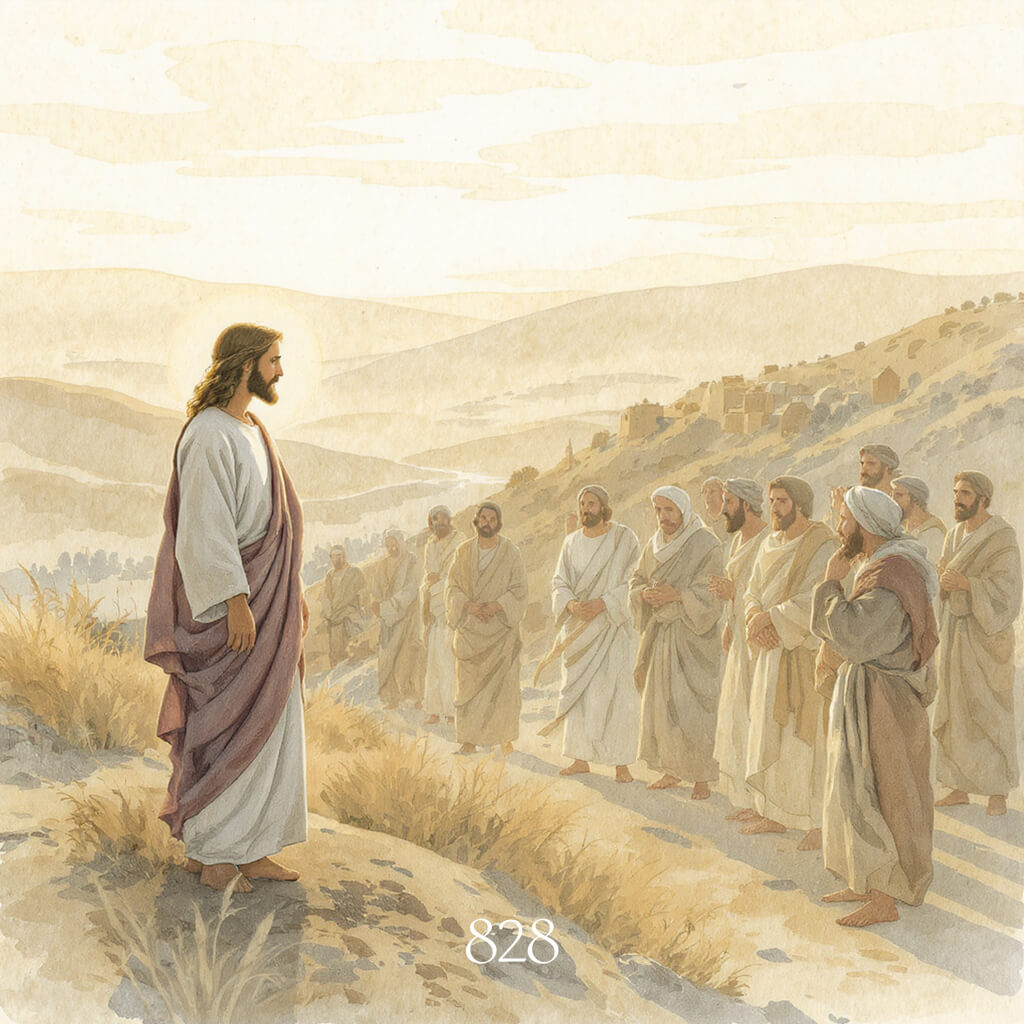
In Luke 10, Jesus appointed seventy-two disciples and sent them to every town and village where he was about to go. He told them to not take any purse, bag, or sandals. He told them to go heal the sick and proclaim the Kingdom of God.

The seventy-two disciples obeyed. They entered villages. When they prayed for the sick, people were healed. They commanded demons to leave and cast them out. When they returned, they told Jesus, "Lord! Even the demons submit to us in Your name!" (Luke 10:17).

Jesus responded, "Behold, I give you authority to tread on serpents and scorpions, and over all the power of the enemy. Nothing will in any way hurt you." Jesus was confirming that what they experienced was God's authority manifesting through them. The same authority is given to all who follow Jesus Christ. Every believer has this authority in Jesus' name.

What It Means

"I give you authority" (δέδωκα ὑμῖν τὴν ἐξουσίαν / dedōka hymin tēn exousian)

The Greek word exousia means legitimate authority. This is authority God officially delegated. The perfect tense dedōka indicates a completed action with continuing results. Jesus already gave us this authority and it remains in effect.

"To tread on serpents and scorpions" (πατεῖν ἐπάνω ὄφεων καὶ σκορπίων / patein epanō opheōn kai skorpiōn)

Serpents symbolize cunning and deception. Scorpions symbolize hidden forces that attack. The word patein means to tread on. This is complete authority and control over both visible dangers and invisible spiritual attacks.

"Nothing will in any way hurt you" (οὐδὲν ὑμᾶς οὐ μὴ ἀδικήσῃ / ouden hymas ou mē adikēsē)

This is one of the strongest ways to negate something in Greek. The construction ou mē is emphatic, expressing firm assurance: under no circumstances, in no way, will it happen. In context, Jesus is speaking within the authority He has just given, over all the power of the enemy. The promise is not that believers will never face pain or hardship in life, but that nothing the enemy brings against them will ultimately prevail.

Claim This Promise

I declare that the words of Luke 10:19 are true in my life.

  • • Jesus has given me authority.
  • • I have authority over the enemy's power.
  • • Nothing will in any way hurt me.
Today's Prayer

Jesus,

You have given me great authority.

I will claim this authority you have given me. When I come against resistance and obstacles, I will proclaim with words, earnestly pray, and diligently take action in the name of Jesus Christ. When I do, may I experience resistance breaking and real breakthrough.

Thank You for giving me authority to overcome. Thank you for protecting me and looking after me.

In Jesus' name I pray, Amen.

Share This Message

Do you know someone who needs to remember they have authority in Christ?

Share this with them and say, "Jesus has given you authority. Nothing can hurt you." Your simple act of sharing could remind them of the power they have already received.

See more: Luke 10:19
eight two eightAdmin

Posted in FOR YOUR SOUL


Joshua 1:5 verse card

A Message Has Arrived for You

These are God's promises for you today:

"No man will be able to stand before you all the days of your life."

"As I was with Moses, so I will be with you."

"I will not leave you or forsake you."

Do you feel like the responsibi...

Deep Dive

The Story Behind The Verse: The Same God Who Was With Moses
Joshua 1:5 - Story Behind the Verse

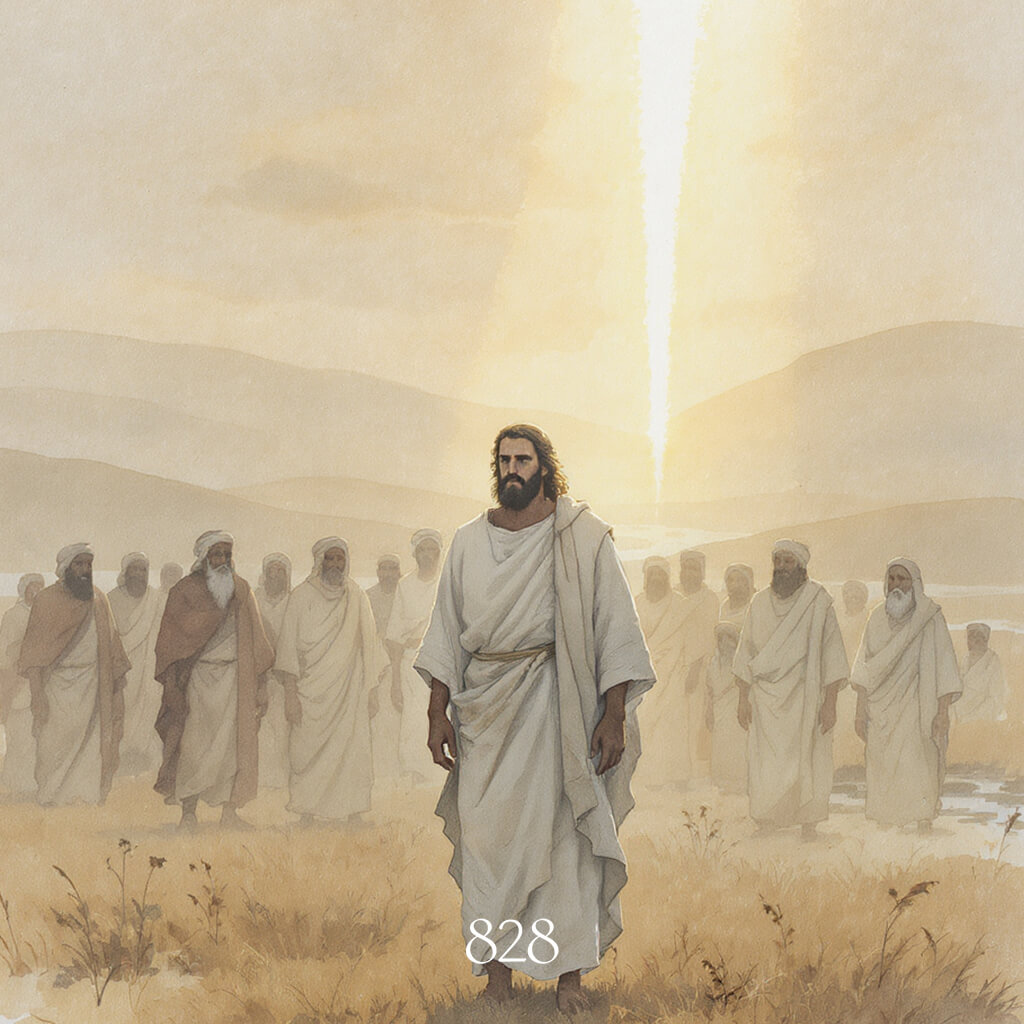
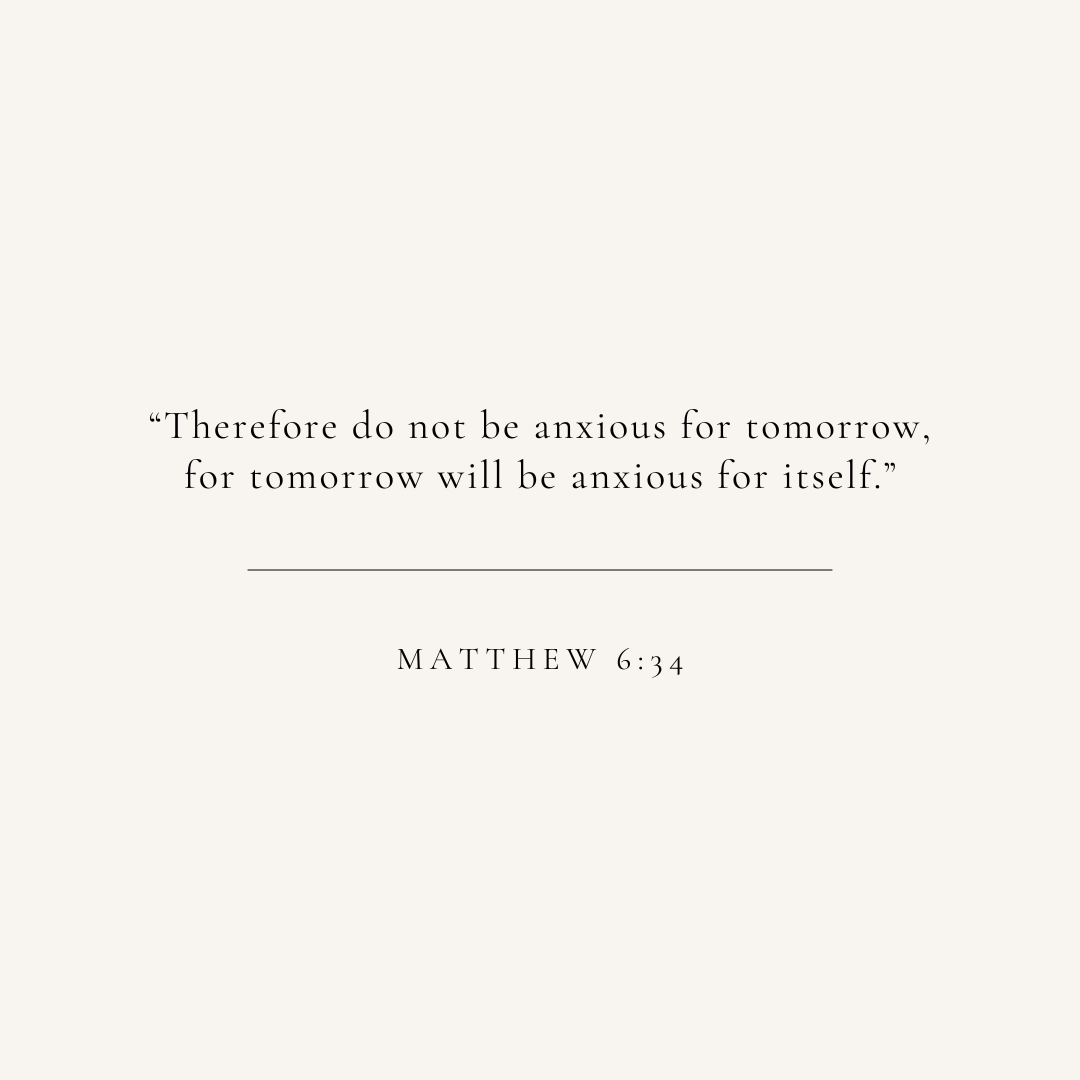
Moses, the leader of Israel, had passed away. For forty years, Moses had served as Israel's leader. Under God's guidance, Moses had confronted Pharaoh, performed various miracles in Egypt, parted the Red Sea, received the Ten Commandments from God, and led the Israelites in the wilderness. After Moses died, Joshua was the next leader of Israel. He was given the responsibility to lead the Israelites into the Promised Land. Entering the Promised land was no easy task. Even though God promised that the land of Canaan would one day be theirs, it did not mean they could simply enter the land and claim it without any effort. There were already established nations in the land.

To claim the Promised Land, what awaited Joshua and the Israelites? They were to face strong nations with strong military. The cities they would have to fight were fortified, with massive walls. The warriors were renown giants. And the Israelites? They had spent the last forty years in the wilderness and did not have the experienced fighting force like the nations they would face.

Joshua might have thought, "Can I do as well as Moses? What if I fail?"

Right at that moment, God spoke, "No man will be able to stand before you all the days of your life. As I was with Moses, so I will be with you. I will not leave you or forsake you" (Joshua 1:5).

And God kept His promise. Joshua led the conquest for seven years. At Jericho, Joshua led the Israelites to march around the city for seven days, and when they shouted, the walls collapsed. At Gibeon, God made the sun stand still so Israel could fully defeat their enemies (Joshua 10:12-13). In total, Joshua and Israelites defeated thirty-one kings. Every promise God made came true. The God who empowered Joshua to do the impossible is the same God who stands with you now. No matter what lies ahead, He will be with you.

What It Means

"No man will be able to stand before you" (לֹא־יִתְיַצֵּב אִישׁ לְפָנֶיךָ / lo-yityatzev ish lefaneycha)

The verb yityatzev comes from yatzav, meaning to take one's stand or hold position, especially in opposition. God is saying that no one will be able to successfully position themselves against you.

"As I was with Moses, so I will be with you" (כַּאֲשֶׁר הָיִיתִי עִם־מֹשֶׁה / ka'asher hayiti im-moshe)

This is a promise of continuity. Ka'asher means "just as," so God is assuring Joshua that He will be with him in the same way He was with Moses. Hayiti points to God's proven, faithful presence with Moses, a presence that does not end with Moses' death. The word im ("with") expresses close, accompanying presence. Moses led with strength because God was with him, and God is promising that same guiding presence to Joshua. In other words, what God worked through Moses will not die with Moses, because God Himself remains unchanged and will be with Joshua.

"I will not fail you nor forsake you" (לֹא אַרְפְּךָ וְלֹא אֶעֶזְבֶךָּ / lo arpeka velo e'ezveka)

The Hebrew word raphah means to loosen one's grip or let something slip. The word azav means to abandon or leave behind. God will not loosen His hold on you, and He will not walk away from you. God is committed to you, and He is always with you.

Claim This Promise

I declare that the words of Joshua 1:5 are true in my life.

  • • God is with me. He will not fail me nor forsake me.
  • • God will never leave me or forsake me.
  • • The God who was with Moses and Joshua is with me today.
Today's Prayer

God,

Thank You for promising to be with me as You were with Moses and Joshua.

I confess that I have been looking at my challenges and have been asking myself, "Can I really do this?" Now, rather than focussing on my current reality and limitations, I lift up my gaze to you God and put my trust in You.

Today I choose to believe Your promise. No one can stand against me because You are with me. Your hold on me is secure. You will not walk away from me.

Anoint me with Your wisdom, courage, and strength so I can take on the challenges before me. I will now step forward with confidence, knowing that the same God who empowered Moses and Joshua is with me now.

In Jesus' name I pray, Amen.

Share This Message

Do you know someone who feels uncertain whether they can handle the responsibilities before them? Someone who is asking, "Can I really do this?"

Share this with them and say, "The same God who was with Joshua is with you today. He will never leave you or forsake you." Your simple act of sharing could remind them that they do not face their challenges alone.
See more: Joshua 1:5
eight two eightAdmin

Posted in FOR YOUR SOUL


Isaiah 43:1 verse card

A Message Has Arrived for You

These are God's promises for you today:

"Do not be afraid, for I have redeemed you."

"I have called you by your name. You are mine."

Life at times brings moments that are out of our control. We encounter situations we did no...

Deep Dive

The Story Behind The Verse: A Promise in Exile
Isaiah 43:1-2 - Story Behind the Verse

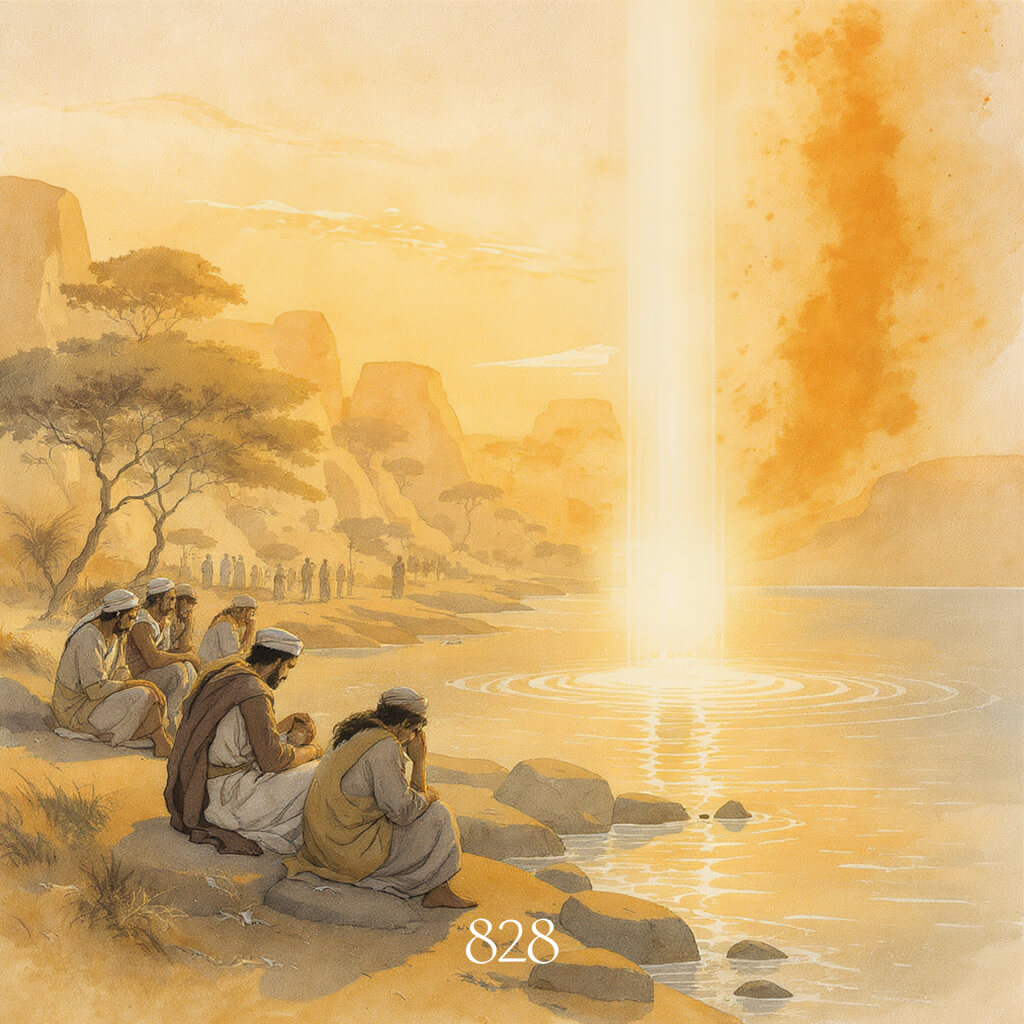
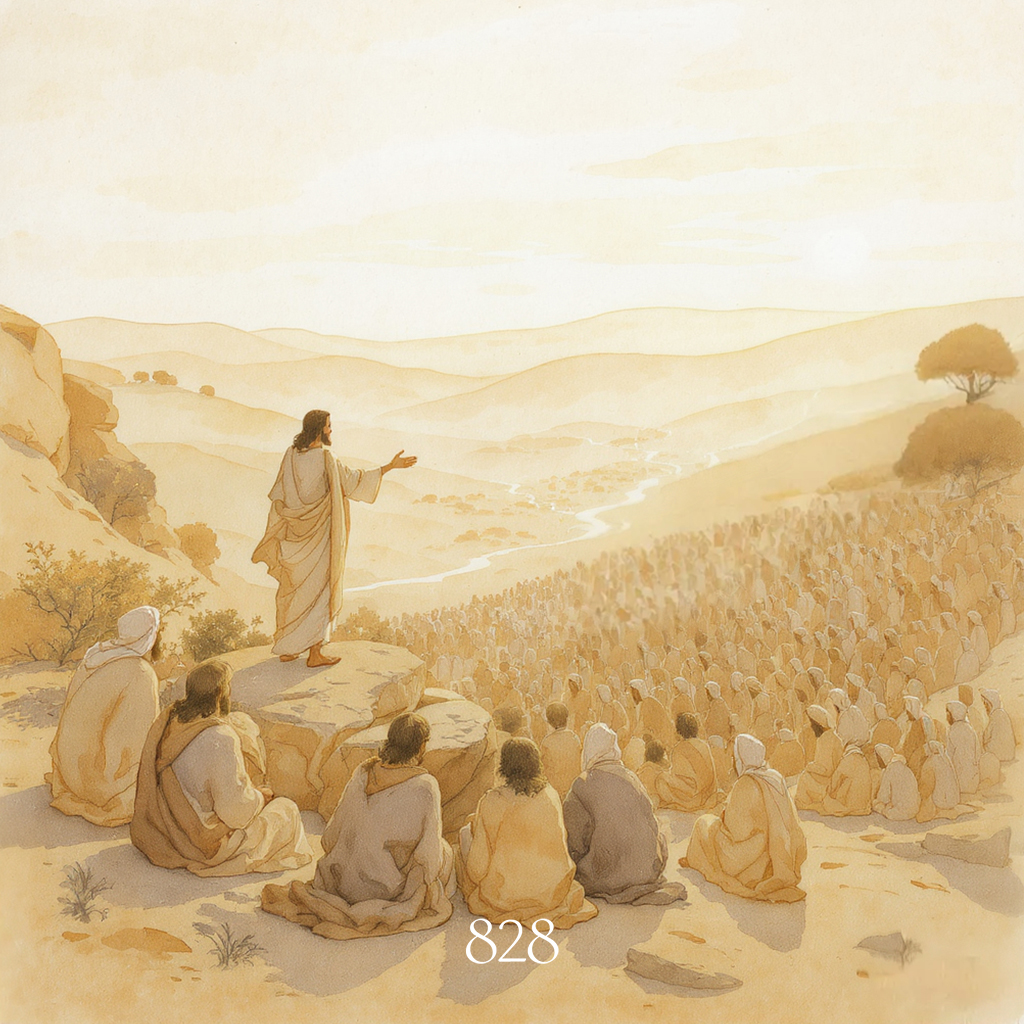
Isaiah 43 was spoken to Israelites facing a dark period in their history: the Babylonian exile. In 586 BC, Babylon destroyed Jerusalem. The temple was burned. The walls collapsed. The survivors were taken captive to a foreign land, about 1,500 kilometers from their home.

For seventy years, they lived as exiles in Babylon. Psalm 137 captures their despair, "By the rivers of Babylon, there we sat down. Yes, we wept, when we remembered Zion… How can we sing the Lord's song in a foreign land?" (Psalm 137:1, 4).

Into this darkness, God spoke through Isaiah, "Do not be afraid, for I have redeemed you. I have called you by your name. You are mine." (Isaiah 43:1). To His people who no longer had a king, a temple, or a land to remind them who they were, God reminded of their identity as His people. Then God gave specific promises about the crises they faced. He promised, "When you pass through the waters, I will be with you. When you walk through the fire, you will not be burned" (Isaiah 43:2). God was not promising to remove the crisis. He was promising to be with them in the midst of it. And seventy years later, just as God promised, they returned home. God kept His word. And now God speaks the same promise to you.

What It Means

"Do not fear, for I have redeemed you" (אַל־תִּירָא כִּי גְאַלְתִּיךָ / al-tira ki ge'altikha)

The verb ga'al means to redeem, to reclaim. It is the word used for a kinsman-redeemer, a close relative who buys back what has been lost to debt or bondage. The is emphasizing how God has paid the price to restore you and bring you back. He intervened to make you His own.

"I have called you by your name. You are mine" (קָרָאתִי בְשִׁמְךָ לִי־אָתָּה / karati v'shimkha li-atah)

Karati means "I have called," and v'shimkha means "by your name." Here, God is not addressing you as a number in a crowd. He is speaking to you as someone personally known to Him. And li-atah ("you are mine") is God saying that you belong to Him. You are in a covenant with God.

Claim This Promise

I declare that the words of Isaiah 43:1 are true in my life.

  • • I am not afraid, for God has redeemed me.
  • • God calls me by my name.
  • • I belong to God.
Today's Prayer

God,

Thank You for reminding me that I belong to You.

There were moments completely out of my control. I was uncertain about what to do and fearful of what would happen. In those moments, you have always been with me and filled me with words of encouragement.

I believe that You paid a great price for my freedom and restoration. I belong to You, and You call me by my name. I trust that You are with me and will protect me.

Remind me of my identity in You and may I live each day with confidence.

In Jesus' name I pray, Amen.

Share This Message

Do you know someone who is going through a difficult time right now?

Share this with them and say, "Do not be afraid. You belong to God. God will take care of you." Your simple act of sharing could remind them that they are not alone.
See more: Isaiah 43:1
eight two eightAdmin

Posted in FOR YOUR SOUL


Isaiah 41:10 verse card


A Message Has Arrived for You

These are God's promises for you today:

"Do not be afraid, for I am with you."

"Do not be dismayed, for I am your God."

"I will strengthen you. I will help you. I will uphold you."

Are you fearful right now?

God tells you not ...

Deep Dive

The Story Behind The Verse: A People Chosen and Held Up
Isaiah 41:10 - Story Behind the Verse

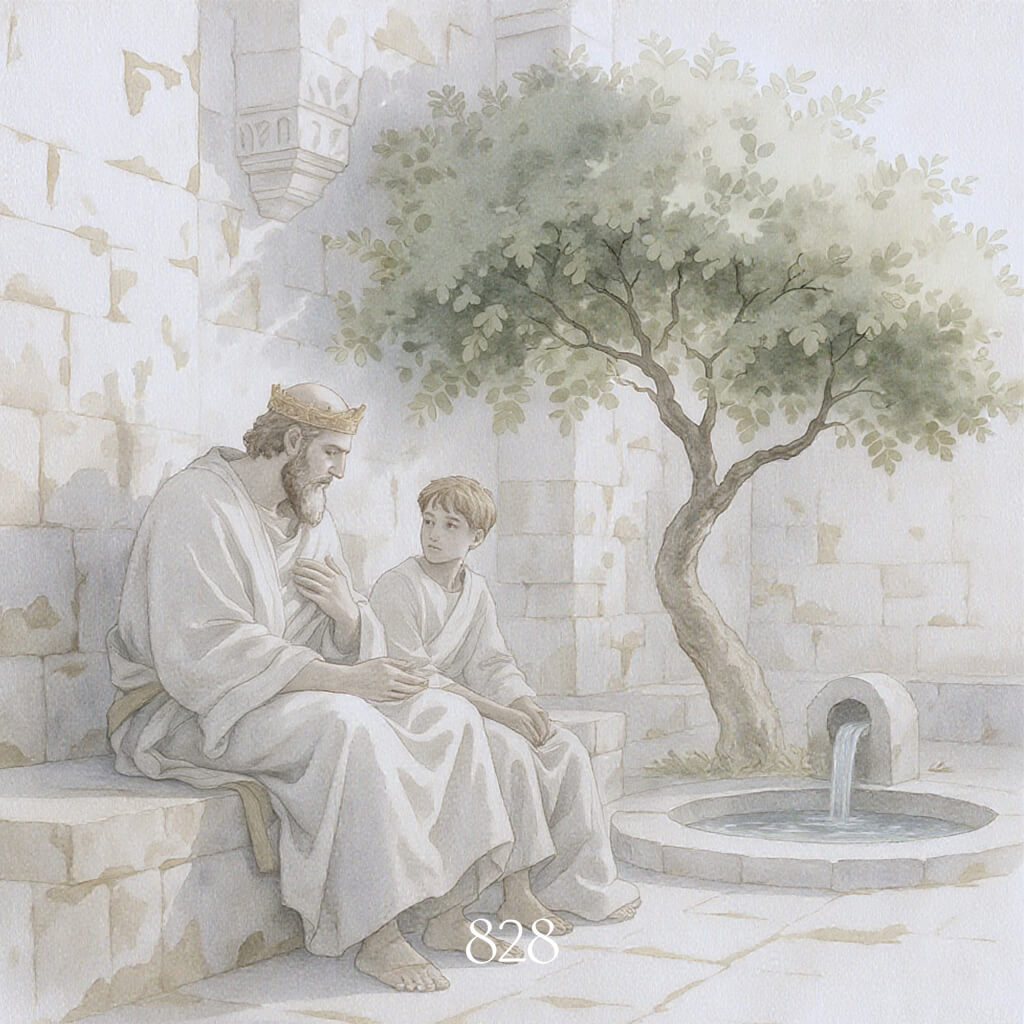
Isaiah 41 opens like a courtroom summons. God calls the nations to draw near for judgment. In the face of the conqueror God raises up, the nations tremble in fear and turn to idols, fastening them down so they will not topple (Isaiah 41:5-7).

In contrast to the nations who rely on idols, the Israelites have God to depend on. God turns to His people and reminds them who they are: "But you, Israel, my servant, Jacob whom I have chosen, the offspring of Abraham my friend" (Isaiah 41:8). God first reminds them of their relationship with Him. They are the people chosen by God.

Then comes God's reassurance and promise: "Do not be afraid, for I am with you. Do not be dismayed, for I am your God. I will strengthen you. I will help you. I will uphold you with the right hand of my righteousness." (Isaiah 41:10).

Idols have no power. They cannot speak, act, or save. But God is living and active. He sees you. He hears you. He reaches out His hand to strengthen, help, and hold you up.

What It Means

"Do not be afraid, for I am with you" (אַל־תִּירָא כִּי עִמְּךָ אָנִי / al-tira ki immekha ani)

The Hebrew phrase al-tira is a strong directive meaning "stop fearing" or "do not continue to fear." The word immekha means "with you," implying close, personal presence. God is right here with you. You can stop fearing because God is with you.

"Do not be dismayed, for I am your God" (אַל־תִּשְׁתָּע כִּי אֲנִי אֱלֹהֶיךָ / al-tishta ki ani elohekha)

The Hebrew word sha'ah means to look around in fear, to be anxious, and to be overwhelmed. The word elohekha is personal, meaning "your God." God is not distant. He is your God, the one who has chosen you, the one who calls you His own.

"I will strengthen you, help you, uphold you" (אִמַּצְתִּיךָ אַף־עֲזַרְתִּיךָ אַף־תְּמַכְתִּיךָ / immatsikha af-azartikha af-temakhtikha)

Three promises build upon each other. Amats means to make firm and give inner strength. Azar means to help and come alongside. Tamak means to hold and support. Idols cannot do any of this. They are lifeless. But your God is living and active. He strengthens you, helps you, and supports you.

Claim This Promise

I declare that the words of Isaiah 41:10 are true in my life.

  • • I am not alone. God is with me.

  • • He is my God. He is for me.
  • • He will strengthen me, help me, and hold me up.
Today's Prayer

God,

Thank You for reminding me that I am not alone.
When the nations trembled, they turned to idols that could not help them. But You are a living God. You see me. You hear me. You reach out Your hand to me.

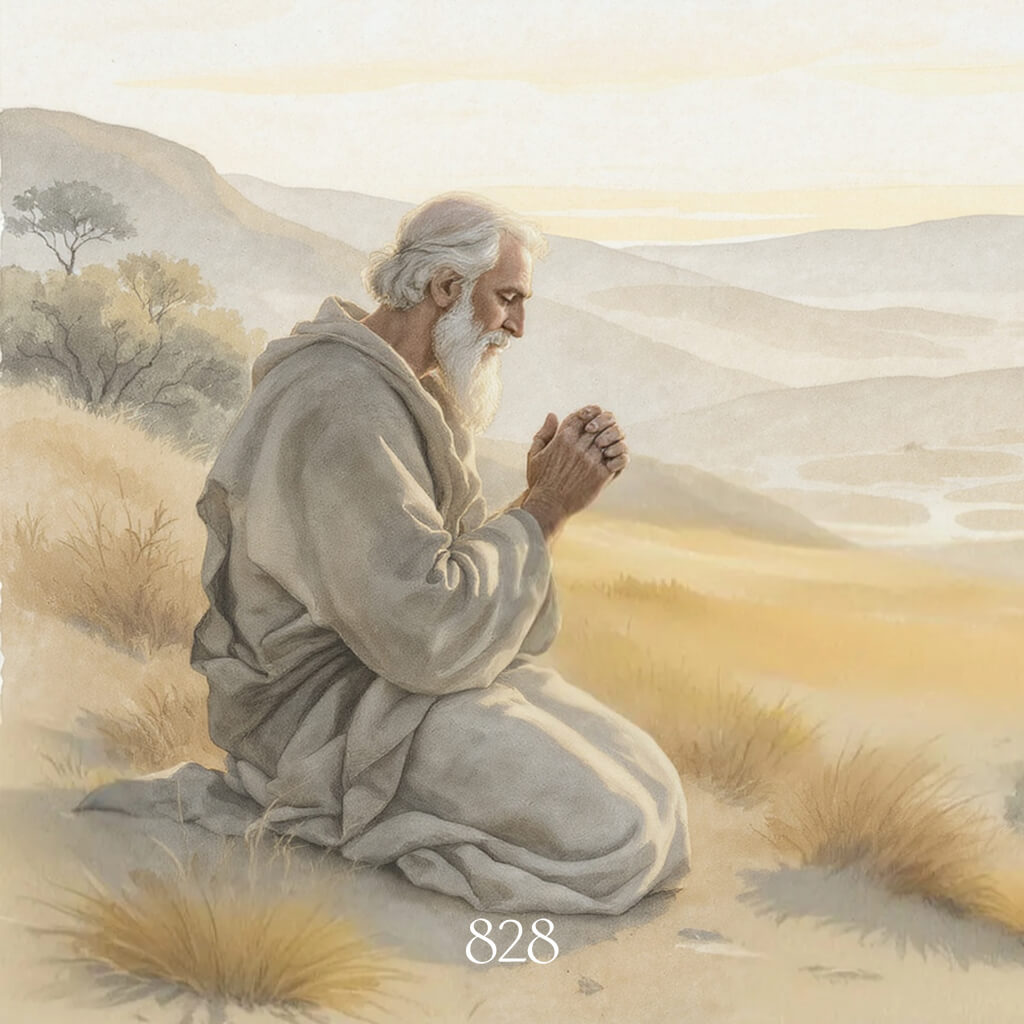
Thank You that You have chosen me and called me Your own. I belong to You.

When fear rises, remind me that You are with me. May I experience you God in greater ways. I trust that You will strengthen me, help me, and hold me up.

In Jesus' name I pray, Amen.

Share This Message

Do you know someone who is afraid right now? Someone who feels alone and overwhelmed?

Share this with them and say, "You are not alone. God is with you. He will strengthen you, help you, and hold you up." Your simple act of sharing could remind them that they have a living God who is at work on their behalf.

See more: Isaiah 41:10
eight two eightAdmin

Posted in FOR YOUR SOUL


Joshua 1:9 verse card

A Message Has Arrived for You


These are God's promises for you today:

"Be strong and courageous."

"Do not be afraid. Do not be dismayed."

"The Lord your God is with you wherever you go."

Have you ever faced a challenge that made you question yourself?

Mayb...

Deep Dive

The Story Behind The Verse: Taking the Place of a Great Leader
Joshua 1:9 - Story Behind the Verse

Moses, the great leader of Israel, had come to the end of his journey. The leader, who had led Israel for forty years through the wilderness, was gone. Under God's command, Moses had confronted Pharaoh. He had parted the Red Sea. He had received the Ten Commandments directly from God. Scripture says, "There has not arisen a prophet since in Israel like Moses, whom the Lord knew face to face" (Deuteronomy 34:10).

Now Joshua who had been Moses' assistant for decades was to take the place of Moses as the leader. He had led Israel's army to victory against the Amalekites. He had been one of the twelve spies sent to scout Canaan, and one of only two who brought back a faithful report. Yet this call to leadership, now filling in the place of Moses, came with great responsibilities.

Joshua may have thought, "I am not Moses. What if people compare me to him and find me lacking? What if I make a mistake and the people suffer?"

God knew what Joshua was fearful of. That is why in Joshua chapter 1 alone, God told him three times: "Be strong and courageous" (Joshua 1:6), "Only be strong and very courageous" (Joshua 1:7), and "Have I not commanded you? Be strong and courageous" (Joshua 1:9). God repeated these words three times because Joshua needed to hear it again and again.

When God mentions these words the third time, God connected Joshua's courage directly to His presence: "Do not be afraid. Do not be dismayed, for the Lord your God is with you wherever you go." God was saying: Everywhere you go, I am there with you. You do not walk this path alone.

What It Means

"Have I not commanded you?" (הֲלוֹא צִוִּיתִיךָ / halo tzivitikha)

The Hebrew particle halo introduces a rhetorical question that expects a yes. It carries the force of firm reassurance, as if God is saying, "I have commanded you, have I not?" God is reminding Joshua that this calling is not self-appointed. It is God-given. And when God commands, He also supplies what He requires.

"Be strong and courageous" (חֲזַק וֶאֱמָץ / chazaq ve'ematz)

The Hebrew verb chazaq means to be strong, firm, or strengthened, to take hold with resolve. Ematz means to be courageous, determined, and steady. This is not a command to manufacture brave feelings. It is a call to choose firmness and forward obedience, even when emotions lag behind.

"Do not be afraid. Do not be dismayed" (אַל־תַּעֲרֹץ וְאַל־תֵּחָת / al-ta'arotz ve'al-techat)

The Hebrew verb ta'arotz carries the sense of being terrified, shaken, or seized with dread. Techat means to be shattered, broken, or inwardly crushed. God is addressing both panic and collapse, not because the assignment is light, but because His presence is weightier than the threat.

"For the Lord your God is with you wherever you go" (כִּי יְהוָה אֱלֹהֶיךָ עִמְּךָ / ki YHWH Elohekha immekha)

The Hebrew word immekha means with you, emphasizing personal, ongoing presence. Not a distant awareness, but nearness. No place is outside His reach, and no moment is beyond His care. This is the true ground of courage: not your ability, but God's abiding presence.

Claim This Promise

I declare that the words of Joshua 1:9 are true in my life.

  • • I cast off all fear.
  • • I will be strong and courageous.
  • • God is with me wherever I go.
Today's Prayer

God,

Thank You for reminding me to be strong and courageous.

I confess that I have focused more on my inadequacies than Your Presence. I have been afraid of failing and making mistakes. Now I choose to focus on You and Your promises for me.

Today I receive Your command to be strong and courageous. I give up to you all the fear that I have. Though the task before me seems to be beyond my abilities, it is not beyond You.

Help me to walk in obedience and trust in Your presence. Thank you for being with me wherever I go.

In Jesus' name I pray, Amen.

Share This Message

Do you know someone who is given a new responsibility? Someone who feels inadequate for what they have been called to do?

Share this with them and say, "God is with you. Be strong and courageous." Your simple act of sharing could give them the courage to step forward.

See more: Joshua 1:9
eight two eightAdmin

Posted in FOR YOUR SOUL


John 14:27 verse card


A Message Has Arrived for You

These are God's promises for you today:

"Peace I leave with you."

"My peace I give to you."

"Do not let your heart be troubled or afraid."

Is your heart troubled and fearful right now?

The world's peace lasts only as long as c...

Deep Dive

The Story Behind The Verse: A Final Gift Before the Cross
John 14:27 - Story Behind the Verse

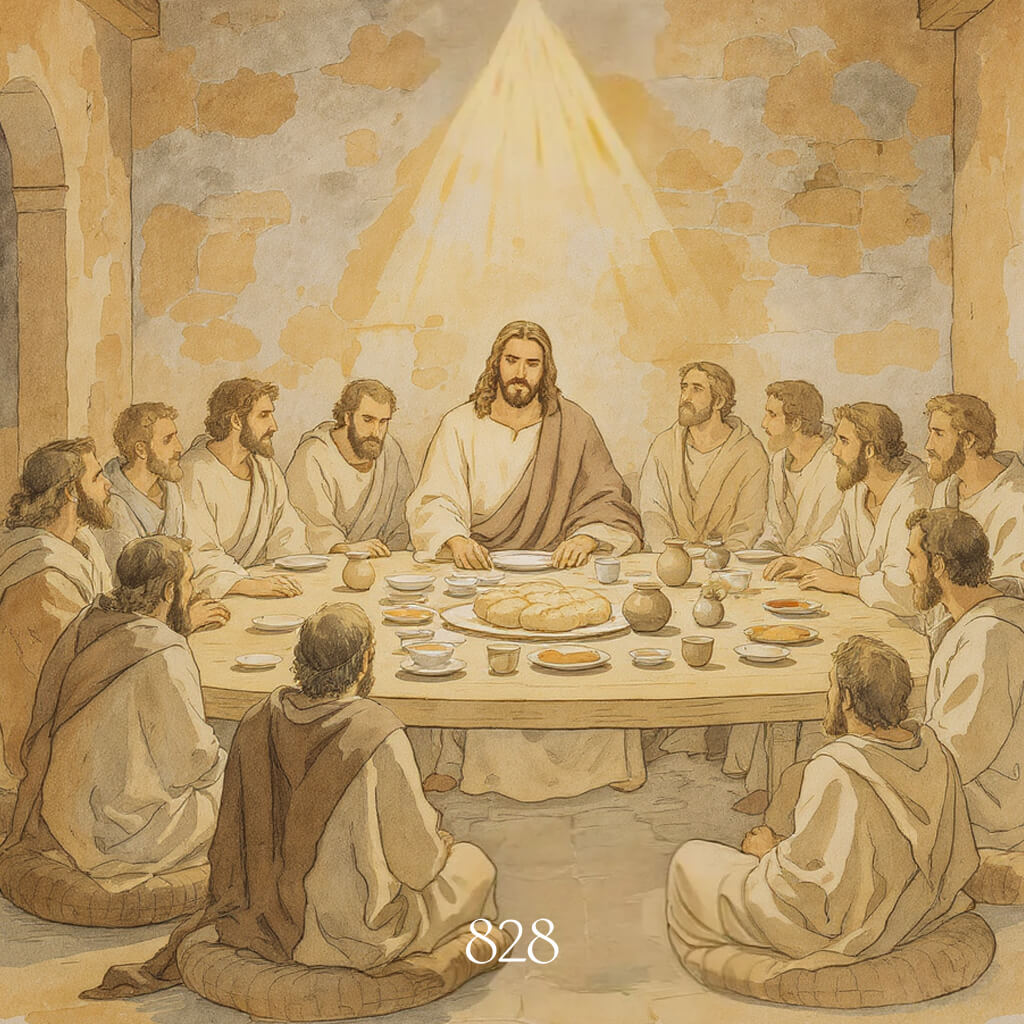
This verse was spoken just hours before Jesus was crucified. In the Upper Room, Jesus had told the disciples that one of them would betray Him, that Peter would deny Him, and that He was going somewhere they could not follow. Their hearts were troubled. Yet in that moment, Jesus spoke, "Peace I leave with you. My peace I give to you."

What kind of peace did Jesus have?

During a violent storm on the Sea of Galilee, the disciples screamed in terror as waves crashed over the boat. They thought they were going to die. Yet Jesus was at peace and was sleeping (Mark 4:38).

When soldiers came to arrest Him in Gethsemane, Jesus stepped forward and asked, "Whom do you seek?" (John 18:4). While His disciples scattered in fear, Jesus remained composed.

When Jesus stood before Pilate, His life hung in the balance. Pilate asked Jesus questions, but Jesus gave him no answer (John 19:9). Frustrated, Pilate said, "Do you not know that I have authority to release you and authority to crucify you?" (John 19:10). Jesus answered, "You would have no authority at all against me, unless it were given to you from above" (John 19:11). He did not defend Himself in panic. He stood in quiet confidence because He knew the Father was in control.

In the moments before His death, surrounded by mockers, Jesus said, "Father, into Your hands I commit My spirit" (Luke 23:46). This is peace. Even in the moment of excruciating pain, He was at peace and placed His trust in the Father. This is the peace Jesus gives to you today.

What It Means

"Peace I leave with you" (Εἰρήνην ἀφίημι ὑμῖν / Eirēnēn aphiēmi hymin)

The Greek word eirēnē means peace, wholeness, and well-being. It translates the Hebrew shalom, which describes flourishing in every dimension of life. The word aphiēmi means to leave behind or to release. Jesus is leaving His peace with His disciples and giving it to them: "Peace I leave with you. My peace I give to you."

"My peace" (τὴν εἰρήνην τὴν ἐμήν / tēn eirēnēn tēn emēn)

The phrase "My peace" employs a double article construction in Greek that emphasizes ownership: "the peace, the one that is Mine." This is the peace that belongs to Jesus Himself. Jesus' peace did not come from His circumstances. It came from His relationship with the Father.

"Not as the world gives" (οὐ καθὼς ὁ κόσμος δίδωσιν / ou kathōs ho kosmos didōsin)

The world promises us peace when our problems are solved. Earn more money, and you will have peace. Find the right relationship, and you will have peace. However, the peace that the world gives is momentary at best and shifts when circumstances change. Jesus offers a completely different kind of peace. His peace does not depend on your problems being solved. This is not a peace that comes after the storm. This is a peace that gives you rest right in the middle of the storm.

Claim This Promise

I declare that the words of John 14:27 are true in my life.

  • • Jesus has given me peace as an inheritance.
  • • His peace fills my heart.
  • • My heart is no longer troubled or fearful.
Today's Prayer

Jesus,

Thank You giving me peace today.

Whenever my heart is shaken by my circumstances, let Your peace, peace the world cannot give, fill my heart fully. May your peace anchor me.

Even in times of trouble, may I be at peace and rest in Your presence.

In Jesus' name I pray, Amen.

Share This Message

Do you know someone whose heart is full of worry and fear? Someone who needs to hear that peace is already theirs to claim?

Share this with them and say, "Jesus gives His peace to you." Your simple act of sharing could help them find rest in His presence.

See more: John 14:27
eight two eightAdmin

Posted in FOR YOUR SOUL


Jeremiah 33:3 verse card


A Message Has Arrived for You

These are God's promises for you today:

"Call to me, and I will answer you."

"I will show you great and difficult things, which you do not know."

Have you reached a point where you do not know what to do?

Here is what you sho...

Deep Dive

The Story Behind The Verse: A Promise for the Future Days
Jeremiah 33:3 - Story Behind the Verse

This verse was spoken in one of the darkest seasons in Israel's history. It was around 588 BC. Jerusalem was under siege by the Babylonian army. King Nebuchadnezzar had surrounded the city with overwhelming force. Food was running out, and hope was fading.

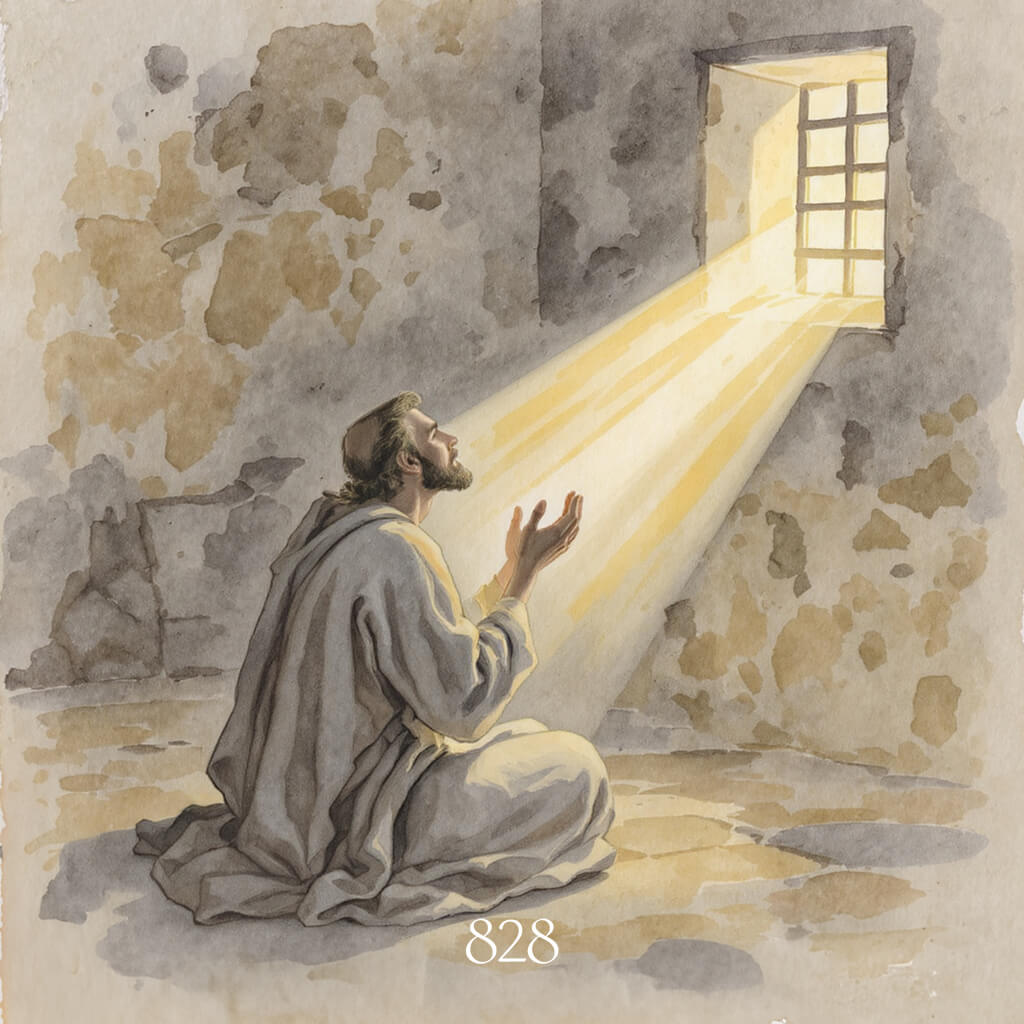
In the middle of this crisis, the prophet Jeremiah was in prison. Jeremiah had faithfully prophesied that Jerusalem would fall to Babylon (Jeremiah 32:3–5). King Zedekiah did not want to hear that message, so he confined Jeremiah in the courtyard of the guard.

Beyond the prison walls, the city was starving while enemy armies waited to destroy what remained. Inside the prison, Jeremiah sat confined and powerless, unable to change the situation in any visible way. From a human perspective, there was no path forward.

It was there, in that moment, that God spoke to Jeremiah: "Call to me, and I will answer you, and will show you great and difficult things, which you do not know."

Immediately after this promise, God began to reveal what those "great and difficult things" were. In the verses that follow, God spoke of the future days of the Israelites. He promised restoration, healing, and renewal after exile. He spoke of a time when joy and gladness would return to Jerusalem. The land would once again be filled with life, and His people would dwell in safety. God even pointed beyond the return from exile to a greater hope, promising a righteous Branch from David who would bring lasting justice and peace (Jeremiah 33:15). These were truths Jeremiah could not have discovered on his own from a prison. Yet, God unfolded a future filled with hope, showing that what looked like the end was actually part of a much larger story God was still writing.

What It Means

"Call to me" (קְרָא אֵלַי / qera elay)

The Hebrew verb for call is qera. It is an imperative, meaning God is calling you to come to Him. Qara means to call out or cry aloud, and it carries a sense of urgency and intention. The word elay refers to the direction of the call. God is inviting you to turn your voice and your need toward Him.

"And I will answer you" (וְאֶעֱנְךָ / ve'e'enka)

The Hebrew for "I will answer you" is ve'e'enkha. This is personal, relational language. God commits Himself as the one who will respond, and the ending kha means "you" in the singular. This is a direct promise to you. God does answer, though His answer may come as guidance, strength, correction, or deliverance rather than an immediate change in circumstances.

"Great and difficult things" (גְּדֹלוֹת וּבְצֻרוֹת / gedolot uvetzurot)

The Hebrew word for great is gedolot meaning weighty and significant. The Hebrew word for difficult is uvetzurot, carrying the idea of what is inaccessible and hidden from view. These things are beyond your access and beyond what you can reach. These are the kinds of answers God must reveal because it is beyond what we can see on our own.

Claim This Promise

I declare that the words of Jeremiah 33:3 are true in my life.

  • • When I call to God, He answers me.
  • • God shows me great and hidden things.
Today's Prayer

God,

Thank You for guiding me to seek you.

I call to You now. I have no solutions and no way forward on my own, but I believe You have already prepared a path for me.

Answer me, Lord. Show me the great and hidden things You have planned. I trust You to work in ways beyond my understanding.

In Jesus' name I pray, Amen.

Share This Message

Do you know someone who feels stuck with no way forward? Someone who has tried everything and does not know what to do?

Share this with them and say, "Call to God. He will answer and show you great things you do not know." Your simple act of sharing could remind them that God has already prepared a way.

See more: Jeremiah 33:3
eight two eightAdmin

Posted in FOR YOUR SOUL


John 14:1 verse card

A Message Has Arrived for You

These are God's promises for you today:

"Do not let your heart be troubled."

"Believe in God. Believe also in me."

Does your heart feel troubled right now?

Maybe something you believed in is not turning out the way you expect...

Deep Dive

The Story Behind The Verse: A Night of Farewell
John 14:1 - Story Behind the Verse

Jesus and His twelve disciples gathered for Passover in the upper room in Jerusalem. Jesus began saying things that deeply unsettled them. Jesus said, "One of you will betray me" (John 13:21). Then He turned to Peter, one of his disciples, and said, "Where I am going, you cannot follow now. The rooster will not crow until you have denied me three times" (John 13:36, John 13:38).

When the disciples heard this, they were devastated. They believed their teacher to be the Messiah. They thought he was going to launch a revolution to overthrow the Roman Empire and restore Israel to its former glory as a sovereign nation. But now, their Teacher Jesus was telling them He was leaving them to go to a place the disciples could not follow. One of them would betray Him. Peter would deny Him. This was totally different from any plan they had ever thought of. But now, though they could not fully understand the meaning behind Jesus' words, they had to trust Him.

In that moment, Jesus spoke, "Do not let your heart be troubled. Believe in God. Believe also in me."

Jesus was not denying the reality of what was coming. He knew what would happen. Within hours, He would be arrested, beaten, and crucified. The disciples would scatter. And yet Jesus also knew this was not the end, but the beginning. His death would not be defeat, but victory.

On the third day, Jesus rose from the dead. In the weeks that followed, He appeared to His disciples. He showed them His hands and His side. He ate with them. He restored them. What felt like the end became a new beginning.

The disciples who had scattered in fear spread the gospel with courage and joy. Their troubled hearts found rest, not because circumstances became easy, but because they believed in God and believed in Jesus.

And now Jesus speaks the same words to you: "Do not let your heart be troubled. Believe in God. Believe also in me." When your world feels like it is falling apart, trust that God is still at work and he has a greater, better plan for you.

What It Means

"Do not let your heart be troubled" (μὴ ταρασσέσθω ὑμῶν ἡ καρδία / mē tarassesthō hymōn hē kardia)

"Troubled" comes from the Greek verb tarassō, a word often used for water that has been agitated and stirred up. It pictures an inner life that is no longer clear and settled, but churned and thrown into turmoil. The form here is a present imperative with a negative, which commonly carries the sense of stopping an action already in progress. In other words, Jesus is speaking to disciples who are already troubled, and He commands them not to continue in that troubled state.

"Believe in God. Believe also in me." (πιστεύετε εἰς τὸν θεόν καὶ εἰς ἐμὲ πιστεύετε / pisteuete eis ton theon kai eis eme pisteuete)

"Believe" comes from pisteuō, which goes beyond mental agreement. It includes trust, reliance, and entrusting oneself to someone. Jesus tells his disciples where to place their trust. Jesus calls them to believe in God and to believe in Him as well.

Claim This Promise

I declare that the words of John 14:1 are true in my life.

  • • I will not let my heart be troubled.
  • • I completely trust and depend on God the Father.
  • • I fully believe in Jesus Christ.
  • • I believe God has a good plan, even when I cannot fully understand it yet.
Today's Prayer

God,

My heart has been troubled. Things are not turning out the way I expected. My world feels like it is falling apart.

But today, I choose to believe in You. I choose to believe in Jesus.

Remind me that what seems like the end can often be the beginning. May I trust that You are still at work, even when I cannot see it.

When anxiety rises, remind me of Your words: "Do not let your heart be troubled." When I cannot understand what is happening, may I trust in Your greater plans.

I now give you my troubled heart. May I find peace and rest in the arms of God my father.

In Jesus' name I pray, Amen.

Share This Message

Do you know someone whose world seems to be falling apart? Someone whose heart is troubled by uncertainty or fear?

Share this with them and say, "Do not let your heart be troubled. Believe in God. Believe also in Jesus. There is a bigger plan you cannot yet see." Your simple act of sharing could help them find peace.

See more: John 14:1
eight two eightAdmin

Posted in FOR YOUR SOUL


Matthew 6:34 verse card


A Message Has Arrived for You

These are God's promises for you today:

"Do not be anxious for tomorrow."

"Tomorrow will be anxious for itself."

Have you ever lost sleep worrying about tomorrow?

Maybe your mind races through worst-case scenarios. “What if I...

Deep Dive

The Story Behind The Verse: Words to a Worried Crowd
Matthew 6:34 - Story Behind the Verse

This verse comes from the Sermon on the Mount, delivered to a crowd gathered on a hillside in Galilee. The people listening to Jesus that day lived under constant pressure and uncertainty. They lived under Roman occupation. Taxes were heavy and relentless. Farmers feared failed harvests. Fishermen worried about coming home with nothing. Families wondered whether they would have enough food and clothing for the next day.

It was to these anxious people that Jesus said, "Therefore do not be anxious, saying, 'What will we eat?', 'What will we drink?', or 'With what will we be clothed?'" (Matthew 6:25).

Jesus was not dismissing their struggles. He had just directed their attention to the birds of the sky and the flowers of the field, showing that God faithfully provides for His creation day by day, and that He will surely provide even more faithfully for His children.

Then Jesus tells the crowd, "Your heavenly Father knows that you need all these things" (Matthew 6:32). At the root of worry is the belief that everything depends on you. It can start to feel as though you must hold everything together by your own strength. But you are not alone. You have a heavenly Father who sees you, knows you, and cares for you. Tomorrow may not be easy, but God will provide new grace and new provision for the challenges of tomorrow.

What It Means

"Do not be anxious for tomorrow" (μὴ οὖν μεριμνήσητε εἰς τὴν αὔριον / mē oun merimnēsēte eis tēn aurion)

The verb merimnaō means to be anxious. It describes a mind that is distracted and pulled in multiple directions at once. Jesus is addressing the kind of anxiety that internally divides us, taking away from today's strength by fixating on tomorrow's unknowns.

"For tomorrow will be anxious for itself" (ἡ γὰρ αὔριον μεριμνήσει ἑαυτῆς / hē gar aurion merimnēsei heautēs)

Tomorrow will bring its own concerns. Jesus is not downplaying future challenges. He is teaching us how God supplies grace. God provides just enough strength for today. When we try to carry tomorrow's burdens with today's portion of grace, we feel overwhelmed because we are carrying more than we were meant to. When tomorrow becomes today, God will provide new grace and provision.

Claim This Promise

I declare that the words of Matthew 6:34 are true in my life.

  • • I will not be anxious about tomorrow.
  • • I will focus my time and energy on today's challenges.
  • • New grace and provision will be given for tomorrow's challenges.
Today's Prayer

God,

I often worry about the future. I lose today's peace by worrying in advance about things that have not yet happened.

God, may I live one day at a time. I believe You give the grace and provision needed for each day. I will faithfully live today to the fullest. I open my eyes to what You are doing and want to walk with You in all that I do today.

I entrust tomorrow to You and trust You to meet me with new grace when it comes.

In Jesus' name I pray, Amen.

Share This Message

Do you know someone who is losing sleep worrying about tomorrow?

Share this with them and say, "Do not worry about tomorrow. God has given you grace and provision to live today." Your simple act of sharing could help them find peace and rest.

See more: Matthew 6:34
eight two eightAdmin

Posted in FOR YOUR SOUL

Proverbs 4:23 verse card


A Message Has Arrived for You

These are God's promises for you today:

"Keep your heart with all diligence."

“For from it flow the springs of life.”

How have you been caring for your heart lately?

Your heart is the source of your life. Everything flows fr...

Deep Dive

The Story Behind The Verse: Guard the Source of Your Life
Proverbs 4:23 - Story Behind the Verse

Proverbs is a collection of wisdom a father shares with his son. It is the voice of a father who longs for his son to find life and to thrive amid the dangers of the world.

The structure of Proverbs 4 reflects this carefully. In verses 20–22, the father urges his son to keep God's words within his heart because they bring life and health to the whole body. Then, in Proverbs 4:23, the father instructs his son to guard his heart. Verse 24 is about watching what comes out of the mouth and keeping a speech free of perversity. Verses 25–27 then focus on direction and path, urging the son to fix his eyes straight ahead and walk with purpose.

Together, the father is teaching a complete way of life: being mindful of what enters the heart, protecting the heart itself, guarding what flows out of it, and living intentionally with vision and direction.

To understand why the heart is given such priority, we need to step into the world of the original audience. In ancient times, the spring or well within a city was its most critical point of survival. When enemies laid siege to a city, their first target was often the water source inside the walls. If the spring was contaminated, the city would inevitably fall. The people could have stored food, strong defenses, and brave soldiers, but without clean water, none of it mattered. Life could not continue.

This is the image behind Proverbs 4:23. The father is teaching his son: your heart is the spring of water for the city of your life. Guard it carefully.

So what does it look like to guard our heart?

When we walk through difficult seasons, guarding our heart means holding onto God's promises. We do not deny our circumstances or reality, but we choose to trust what God has said and to live by faith. When others criticize us or speak falsely about us, guarding our heart means having discernment. We refuse to let those voices define us and remain anchored in God's truth and in our worth in Him.

God calls us to protect and care for our heart because what flows out of it influences every part of our life. How well we guard it will determine what ultimately comes forth.

What It Means

"Keep your heart" (שְׁמֹר־לִבֶּךָ / shemor libbekha)

The Hebrew word libbekha means "your heart." In Proverbs, the heart is not limited to emotions. It refers to the center of your inner life: your thoughts, desires, will, conscience, and the decision-making core of who you are. The Hebrew verb for keep is shamar, meaning to guard, keep, or watch over with careful attention. This is an ongoing, intentional care over what you allow to shape you inwardly.

"With all diligence" (מִכָּל־מִשְׁמָר / mikkol mishmar)

This phrase has a superlative force. It means to guard your heart above everything else you guard. In other words, guarding your heart is the highest priority. Proverbs is teaching that many things in life matter, but the heart matters most because it sits upstream of everything else.

"The wellspring of life" (תּוֹצְאוֹת חַיִּים / totze'ot chayyim)

Many English translations render this as wellspring of life, but the Hebrew is more literal. The word totze'ot means outgoings, what goes out, or what proceeds from something. Chayyim means life. The phrase points to the direction life takes and the outcomes of life. In other words, the condition of your heart influences your words, choices, habits, and relationships. If the inner source is guarded and shaped by God's truth, what flows out will have life. If the inner life is left unguarded, what flows out will eventually reflect that too.

Claim This Promise

I declare that the words of Proverbs 4:23 are true in my life.

  • • My heart is the source of my life.
  • • I will guard my heart with all diligence.
  • • I will hold onto God's promises during difficult seasons.
  • • I will not let discouraging voices define me.
  • • When I care for my heart, springs of life will flow from it.
Today's Prayer

God,

I confess that I have not always guarded my heart well. I have allowed discouraging circumstances and negative words to enter my heart.

Today, I am reminded that my heart is the source from which my life flows. May I guard it with care. God, I will lift my eyes from my circumstances and fix them on You. I will filter what I accept, and I will reject any thoughts or words that contradicts Your truth.

As a gardener tends a garden, I will now tend my heart. I will not let any thoughts or words that bring anxiety, hopelessness, and harm to enter through the door of my garden. Should they enter and begin to grow like weeds, give me discernment to notice them quickly. When I see them, teach and guide me to diligently pull them out at the root, so what You are planting in me can grow freely and flourish.

Fill my heart with Your truth, Your peace, and Your life. Let what flows from my heart bring life to those around me.

In Jesus' name I pray, Amen.

Share This Message

Do you know someone whose heart has been weighed down by worry, negativity, or bitterness?

Share this with them and say, "Care for your heart. Everything in your life flows from it." Your simple act of sharing could help them care for their heart better.

See more: Proverbs 4:23
eight two eightAdmin

Posted in FOR YOUR SOUL

1 John 4:18 verse card

A Message Has Arrived for You

These are God's promises for you today:

"There is no fear in love."

"Perfect love casts out fear."

Are you fearful of God's punishment or judgment?

Is there any part of you that fears God’s punishment?

Here is what you should ...

Deep Dive

The Story Behind The Verse: The Climax of God's Love
1 John 4:18 - Story Behind the Verse

First John chapter 4 has a clear progression. It begins with discernment of spirits in verses 1 through 6. John warns that not every spirit is from God, so believers must discern what they hear. Those who belong to God confess Jesus Christ has come in the flesh and listen to the truth. Then John moves to the source and nature of love in verses 7 through 12. Love originates from God, and those born of God love others. Next comes assurance of abiding in God in verses 13 through 16. God gives His Spirit as assurance that we abide in Him and He in us. Finally, the chapter reaches its climax with confidence before judgment in verses 17 and 18. When you believe in Christ and live in God's love, that love begins to grow you. And as it grows, it produces confidence before God, not fear of judgment.

In 1 John 4:18, John contrasts confidence before God with fear of judgment. Throughout the bible, the "fear of the Lord" often refers to reverence, awe, and humble obedience we should have toward God. Proverbs 1:7 says, "The fear of the Lord is the beginning of knowledge." The fear mentioned here recognizes and acknowledges God's holiness and power. When we have this fear (reverence) towards God, we love and respect His authority and presence so much that we do not want to dishonor Him. On the other hand, in 1 John 4:18, the fear is specifically referring to the fear of punishment. While it is good to have reverence for God, being fearful of God's punishment and judgement is not a healthy kind of fear. This kind of fear does not come from God.

Today, if there is any part of us that is fearful of God's punishment, we should remember that God is gracious and merciful. He is slow to anger and abounding in steadfast love (Psalm 145:8). He is Your father. You are His child. When you go before Him, He is a gentle, kind, and thoughtful Father who loves you well. If you have not yet personally experienced the love of God the Father, ask Him in prayer to show you His heart, so you can come to Him as His beloved child and trust Him. If you ask, God will surely give. When you go before Him as His beloved child, God pours forth His perfect love, and that love has the power to cast out all fear.

What It Means

"There is no fear in love" (φόβος οὐκ ἔστιν ἐν τῇ ἀγάπῃ / phobos ouk estin en tē agapē)

"Fear" is the Greek word phobos. This refers to the fear of punishment and dread of rejection. This kind of fear does not come from God. John calls us to cast this fear out with God's perfect love.

"Perfect love casts out fear" (ἡ τελεία ἀγάπη ἔξω βάλλει τὸν φόβον / hē teleia agapē exō ballei ton phobon)

"Perfect" is the Greek word teleia, meaning complete and mature. It describes love that is no longer conditional or uncertain. "Casts out" comes from the phrase exō ballei, a strong expression meaning to drive out or expel. Fear does not gradually fade away when love arrives; it is actively driven out. When God's love is experienced fully, fear of punishment cannot remain.

"Because fear has to do with punishment" (ὅτι ὁ φόβος κόλασιν ἔχει / hoti ho phobos kolasin echei)

"Punishment" is the Greek word kolasis, which refers to penalty or judgment. It is fear rooted in the expectation of divine punishment. But God did not send His Son to condemn the world, but to save it (John 3:17). When this truth is grasped, fear loses its hold.

"He who fears is not made perfect in love" (ὁ δὲ φοβούμενος οὐ τετελείωται ἐν τῇ ἀγάπῃ / ho de phoboumenos ou teteleiōtai en tē agapē)

"Made perfect" comes from teteleiōtai, meaning to be brought to completion or fullness. John is describing a spiritual condition. Fear of punishment indicates that God's love has not yet reached its full effect in that person's heart. Where fear remains, love is still in the process of being completed. The remedy is not putting in more effort but having fellowship with God the Father and receiving His love.

Claim This Promise

I declare that the words of 1 John 4:18 are true in my life.

  • • I have reverence for God.
  • • I come before Him as His beloved child.
  • • I am held in the love of God the Father.
  • • God's perfect love casts out my fear of punishment.
Today's Prayer

God,

I confess that I have at times been fearful of Your punishment and judgment. This fear did not come from You.

Today, I ask You to meet me as God the Father. I want to know the loving Father who delights in His children.

Pour forth Your perfect love into my heart. Cast out every fear of punishment that has held me back from approaching You with confidence. Help me to come before You as Your beloved child, knowing that You receive me with open arms.

Thank You that You sent Your Son to save me.

Thank You for the overflowing, exquisite joy that comes from being loved by You.

In Jesus' name I pray, Amen.

Share This Message

Do you know someone who is fearful of God's punishment? Someone who needs to experience God as a loving Father?

Share this with them and say, "God the Father loves you very much. His perfect love casts out all fear." Your simple act of sharing could help them approach God with confidence.

See more: 1 John 4:18