Matthew 6:26
All Things Together for Good ·
A Message Has Arrived for You
These are God's promises for you today:
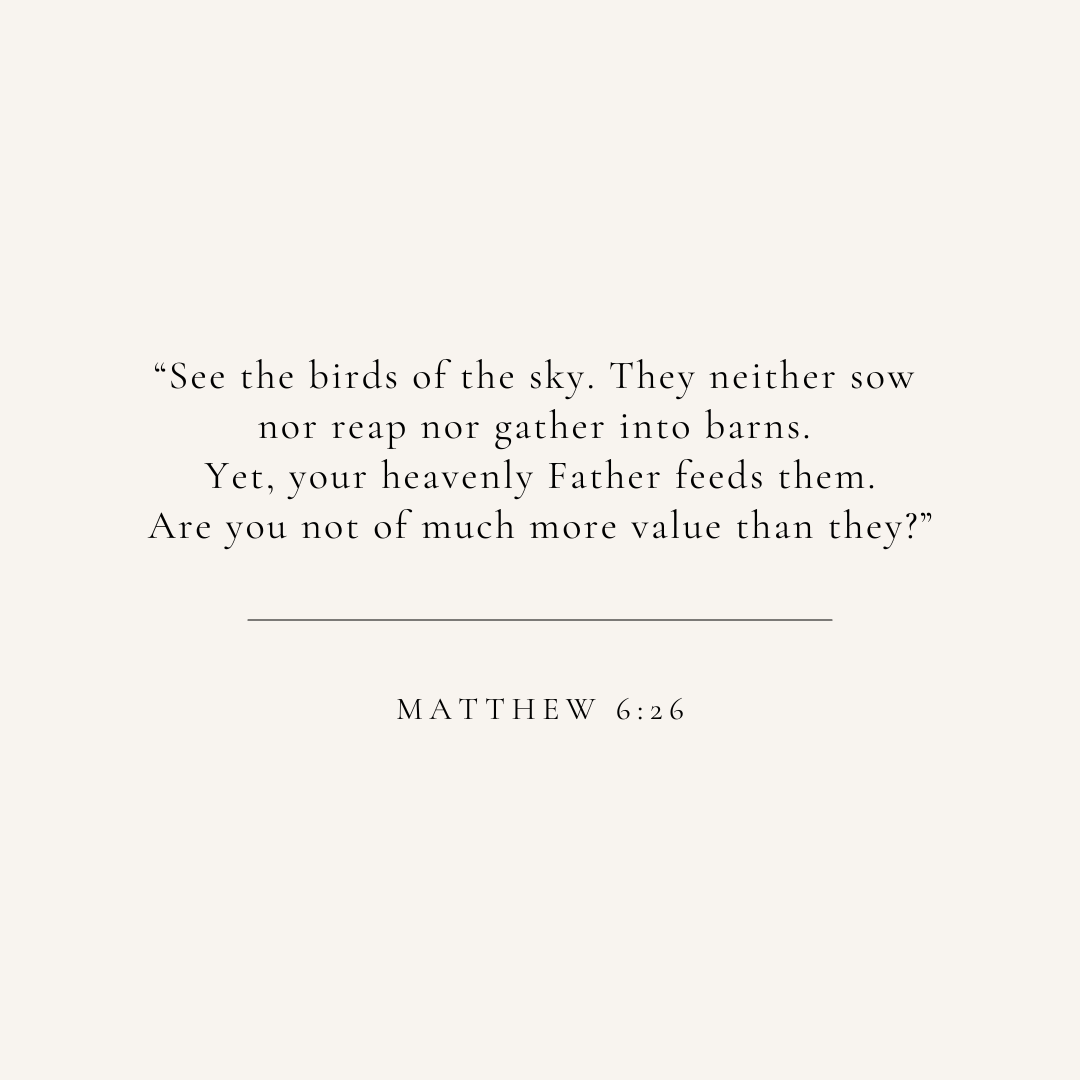
"Your heavenly Father feeds the birds of the sky.”
"Are you not of much more value than they?"
Do you find yourself anxious about provision?
Perhaps you are worried about the future. Perhaps you are stressed about finances, career, or whether you will have enough.
Here is what God wants you to know: Your heavenly Father sees you and knows what you need. And you are far more valuable to Him than you realize.
Jesus pointed to the birds of the sky. They do not sow, reap, or gather into barns. Yet God feeds them every day. Then Jesus asked a powerful question: "Are you not of much more value than they?" If God cares for even a small bird, how much more does He care for you, His child?
You are His treasured child. He knows all your needs and will provide for you.
So always remember this:
You have a heavenly Father who treasures you.
You are more valuable than you know.
God knows all your needs and will provide for you.
Deep Dive
The Story Behind The Verse: A Message to the Anxious
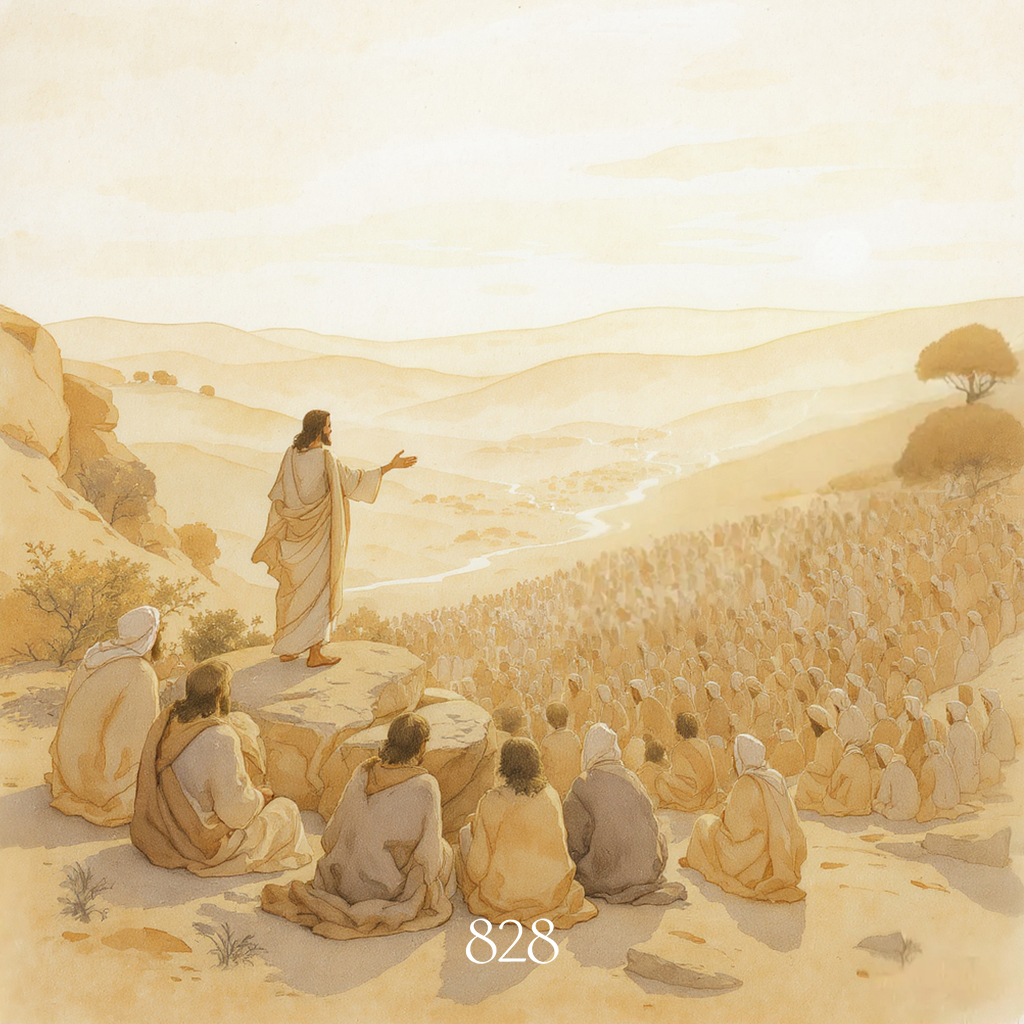
This verse comes from Jesus' Sermon on the Mount, spoken to a crowd of ordinary people whose lives were marked by uncertainty. Many lived close to the edge of survival. In that world, daily life revolved around sowing and reaping. If the rains failed, crops were lost. If pests struck, food supply could be destroyed. Heavy taxation and debt forced many to lose their land and depend on day-to-day labor. For these people, worrying about having enough was a daily reality.
It is to these anxious people that Jesus says, "Look at the birds of the sky. They do not sow or reap or gather into barns. Yet your heavenly Father feeds them. Are you not of much more value than they?" (Matthew 6:26). To farmers and laborers whose entire lives were consumed by planning, storing, and surviving, this was a striking image. Birds did none of the things that determined human survival, yet they were sustained by God.
This was a redirection of focus. Jesus was inviting people living in survival mode to shift their attention from the problem of provision to the truth of their identity. He was not saying that food, work, or security did not matter. He was saying that the heavenly Father already knew what they needed and was looking out for them.
He continued, "Which of you, by being anxious, can add one moment to his lifespan?" (Matthew 6:27). Anxiety does not increase provision. It only robs the present moment of peace.
The same heavenly Father who feeds the birds and clothes the lilies is your Father today. He knows your needs before you speak them. He treasures you more than you realize. So place your trust in Him. You are His child, and He is faithful.
What It Means
"Look at the birds of the sky" (ἐμβλέψατε εἰς τὰ πετεινὰ τοῦ οὐρανοῦ / emblepsate eis ta peteina tou ouranou)
The Greek word emblepo means to look intently, to observe carefully. Jesus is not saying "glance at birds." He is saying "really look, study them, learn from them." And peteina refers to common birds, not rare ones. Jesus uses the most ordinary example to make His point: If God cares for the most common creatures, how much more does He care for you?
"Your heavenly Father feeds them" (ὁ πατὴρ ὑμῶν ὁ οὐράνιος τρέφει αὐτά / ho pater hymon ho ouranios trepei auta)
Jesus does not say "the Creator" or "the Almighty." He says "your Father." The Greek word pater is a relational term, not just a title. The word trepei means to feed, to nourish, to sustain.
"Are you not of much more value than they?" (οὐχ ὑμεῖς μᾶλλον διαφέρετε αὐτῶν / ouch hymeis mallon diapherete auton)
The Greek word mallon means much more, far more. The word diaphero means to be of greater value. This is not a small difference. Jesus is saying you are incomparably more valuable because of who you are to God: His child.
Claim This Promise
I declare that the words of Matthew 6:26 are true in my life.
- • I am God's treasured child.
- • I am of much more value than the birds He feeds.
- • My heavenly Father knows all my needs.
- • I do not need to be anxious. My Father cares for me.
Today's Prayer
God,
I confess I have been anxious about my future. I have also worried about provision, whether I will have enough.
But today I hear Your word: Look at the birds. I feed them. Are you not of much more value than they?
Forgive me for worrying as if You did not know my needs. Forgive me for striving as if my value depended on what I could build.
Thank you for reminding me of my value and identity. You are my Father, and I am Your child. You are my Father. You know what I need, and You deeply care for me.
Thank You that my worth is not in what I achieve, but in the Father who calls me His own.
In Jesus' name I pray,
Amen.
Share This Message
Do you know someone who is anxious about provision? Someone who is worried about the future and whether they will have enough?
Share this with them and say, "You are more valuable than you know. Your heavenly Father sees you and cares for you." Your simple act of sharing could remind them of their true worth in God's eyes.